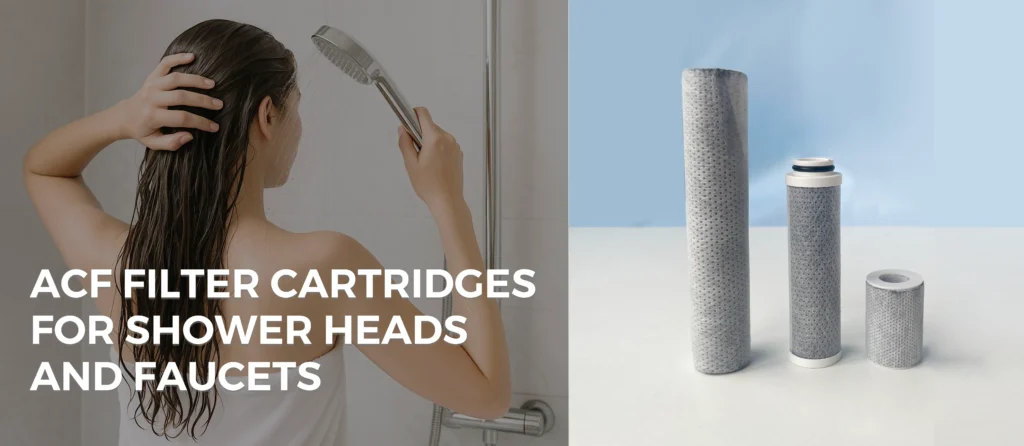
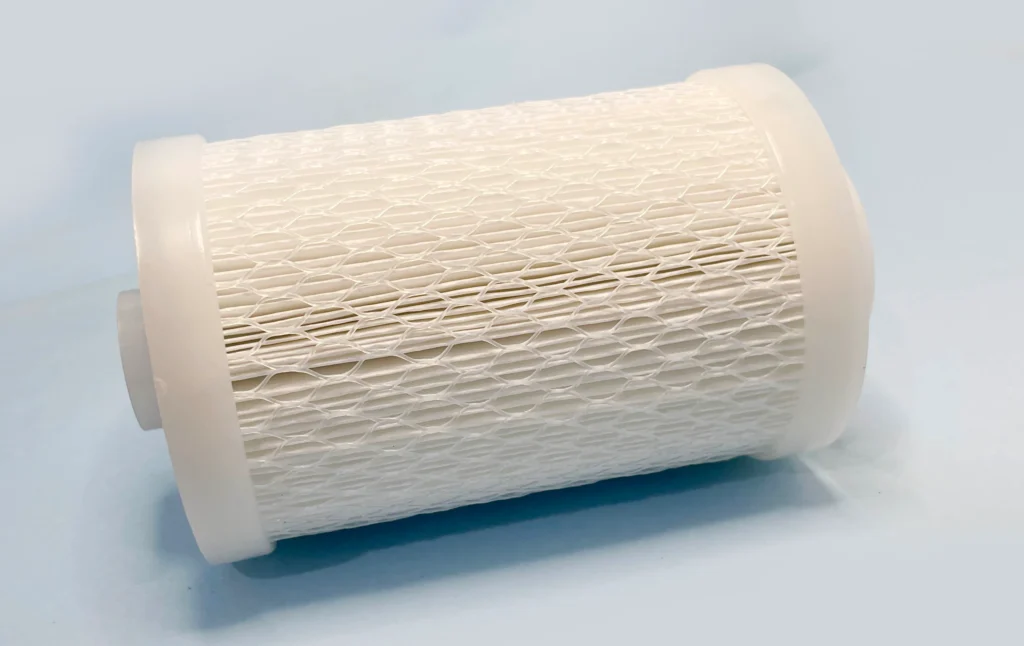
When choosing a water purifier, many people ask:
Is a 3-stage or 5-stage water filter better? What’s the difference, and which one should you choose?
The truth is, the number of filter stages is not the most important factor—the actual filtration performance is what matters.
In this guide, we’ll compare 3-stage vs 5-stage water filters in terms of filtration accuracy, purification ability, water quality, and cost—so you can make the right choice.
What Is a Water Purifier?
A water purifier (also known as a water filtration system) is a device designed to remove impurities and improve water quality based on usage needs.
Traditional systems use a progressive filtration structure, where filters go from coarse to fine. A typical system may include:
- PP sediment filter
- Granular activated carbon
- Carbon block filter
- RO membrane or ultrafiltration membrane
- Post carbon filter
These are commonly configured into 3-stage or 5-stage filtration systems.
3-Stage vs 5-Stage Water Filter – Key Differences
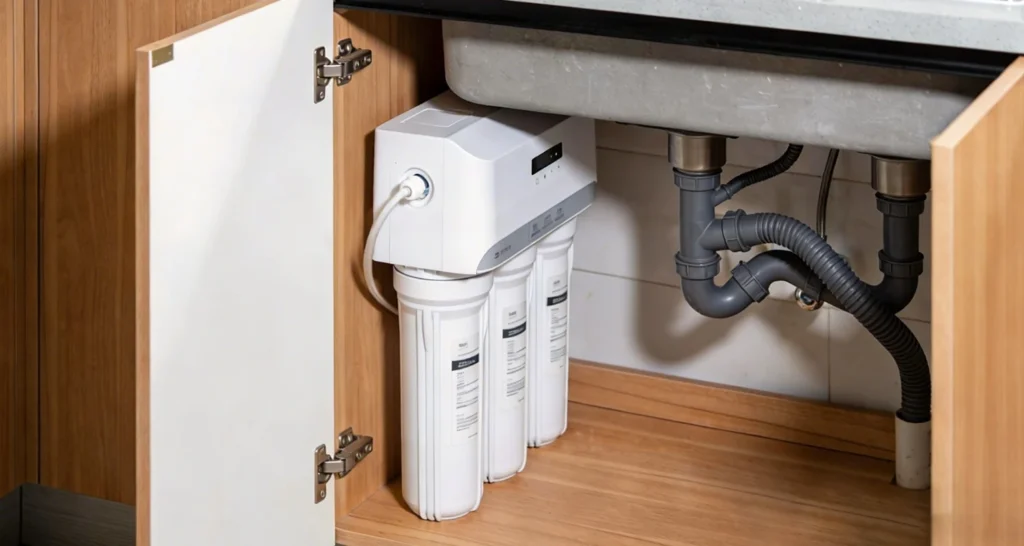
3-Stage Water Filter (Basic Filtration – Usually Ultrafiltration Systems)
A typical 3-stage water filter includes:
Stage 1: PP Sediment Filter
Removes visible particles like sand, rust, and suspended solids (~5 microns).
Stage 2: Granular Activated Carbon (GAC/UDF)
Removes chlorine, odors, and some organic contaminants.
Stage 3: Carbon Block (CTO) or Ultrafiltration (UF) Membrane
CTO: further improves taste and removes chemicals.
UF (0.01–0.1 micron): removes bacteria and some viruses, cannot remove heavy metals or limescale, best for basic filtration needs.
5-Stage Water Filter (Advanced Filtration – RO Systems)
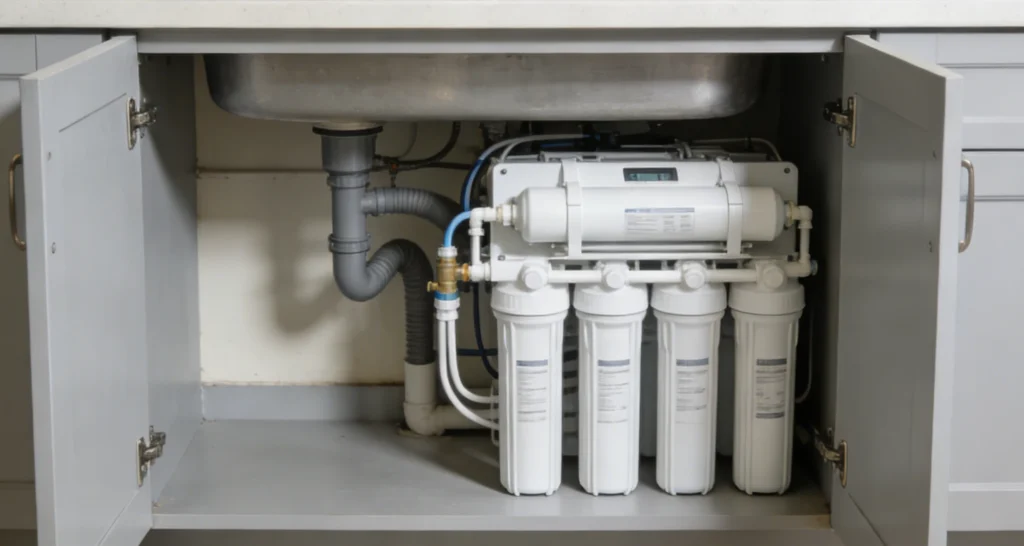
A 5-stage water filter typically includes:
Stages 1–3: Pre-filtration
(Same as 3-stage: sediment + carbon filters)
Stage 4: RO Membrane (Core Technology)
Removes heavy metals, dissolved salts, limescale, bacteria, and viruses.
Stage 5: Post Carbon Filter (T33)
Improves taste and removes residual odors
RO membrane precision: 0.0001 micron (Extremely fine—removes almost all contaminants)
3-Stage vs 5-Stage Water Filter Comparison Table
| Feature | 3-Stage (UF Filter) | 5-Stage (RO Filter) |
| Filtration accuracy | 0.01–0.1 micron | 0.0001 micron |
| Removes particles | ✅ | ✅ |
| Removes chlorine/odor | ✅ | ✅ |
| Removes bacteria | ✅ | ✅ |
| Removes heavy metals | ❌ | ✅ |
| Removes limescale | ❌ | ✅ |
| Water type | Mineral water retained | Purified (low mineral) |
| Water flow | High | Lower |
| Wastewater | None | Yes (1:1–1:3 ratio) |
| Taste | Average | Better, smoother |
| Cost | Lower | Higher |
Which One Should You Choose?
Choose a 3-stage water filter if:
- Your tap water quality is already good
- You only need basic filtration
- You want to retain natural minerals
- You have a limited budget
- You mainly use water for cooking or washing
Choose a 5-stage RO water filter if:
- Water quality is poor
- There is limescale buildup
- You are concerned about heavy metals
- You want safe drinking water directly from the tap
- You care about better taste
Filter Replacement & Maintenance
To ensure safe and effective filtration:
- PP sediment filter: replace every 3 months
- Activated carbon filters: replace every 6 months
- RO membrane: replace every 1–2 years (depending on usage)
Regular maintenance ensures clean, safe drinking water at all times.
Final Verdict: 3-Stage or 5-Stage Water Filter?
The main difference between 3-stage and 5-stage water filters lies in:
- Filtration precision
- Purification capability
- Application scenarios
- Cost
3-stage filters are ideal for basic filtration and good water quality areas, and 5-stage RO systems are best for deep purification and safe drinking water.
Bonus: Are More Filter Stages Always Better?
Not necessarily.
Modern systems sometimes use composite filter cartridges that combine multiple functions into fewer stages. This means the 3-stage system can sometimes perform like a 5-stage system
These are ideal for:
- Small spaces
- Compact installations
- Users who want high performance with fewer components
Frequently Asked Questions (FAQ)
Q1: Is a higher number of filter stages always better?
No. What matters is filtration performance, not the number of stages.
Q2: Can you drink water from a 3-stage filter directly?
Yes, but it may not remove heavy metals or limescale completely.
Q3: Is a 5-stage RO filter worth it?
Yes—especially if your water quality is poor or you want safer drinking water.
Q4: What is the main advantage of RO filtration?
It removes almost all contaminants, including heavy metals and dissolved solids.