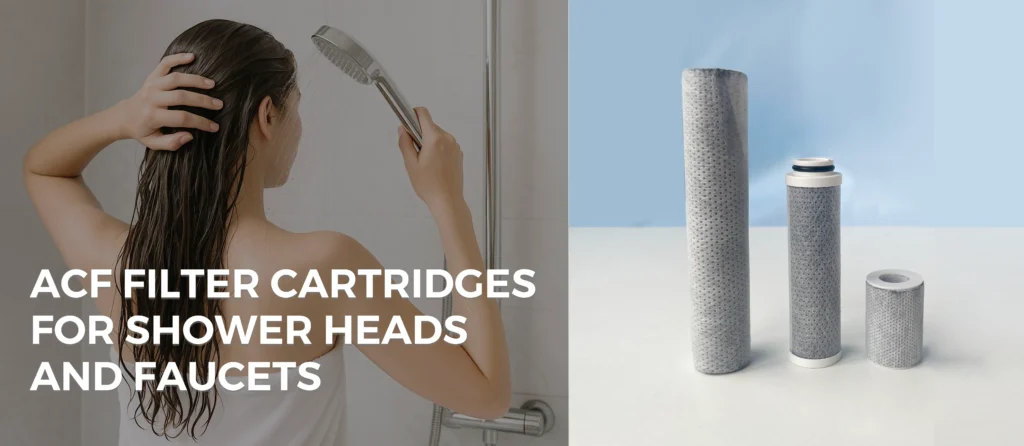
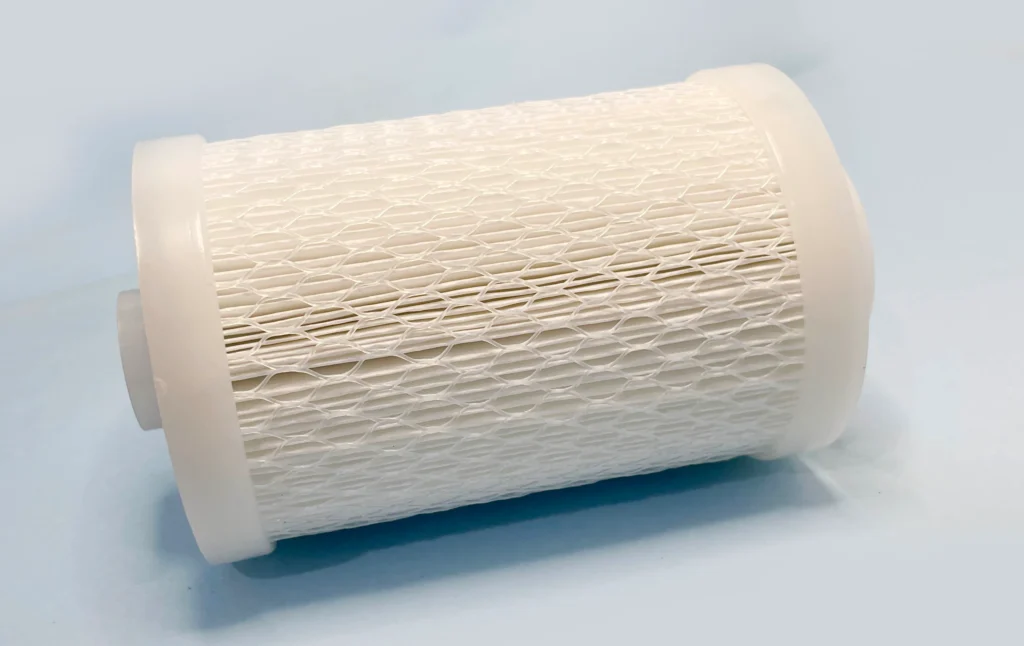
In the water filtration systems industry, whole-house and point-of-use water filtration systems are two different filtration strategies. A whole-house system is installed at the main water inlet, treating all water used throughout the building, including for bathing, laundry, and appliances.
In contrast, a point-of-use (POU) system is installed at a specific outlet—like a kitchen faucet, coffee machine, or shower—focusing on water used for drinking or direct consumption.
From a filter cartridge manufacturer’s perspective, understanding these differences is essential because each system requires a completely different cartridge structure, flow design, and filtration media.
Equipment assemblers, brand owners, or distributors often have specific technical requirements—for example, whole-house systems require higher flow stability, or POU devices require finer filtration precision.
Therefore, choosing the right cartridge type and media combination depends not on personal preference, but on the application scenario and system design.
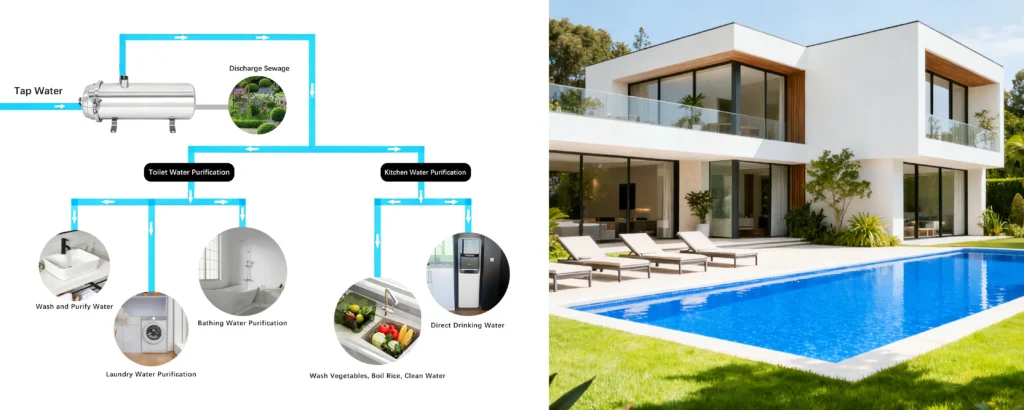
Understanding Water Filtration Systems from a Technical Perspective
In manufacturing, water filtration systems are designed to remove physical and chemical contaminants by combining several mechanisms—mechanical sieving, adsorption, and sometimes ion exchange or catalysis.
For B2B applications, stability, cost-efficiency, and compatibility with existing housings are critical factors.
At the factory level, we classify systems into:
- Whole-house (point-of-entry) – Large-flow, long-life filters that protect all downstream water lines.
- Point-of-use (POU) – Compact filters for specific outlets, emphasizing adsorption efficiency and taste improvement.
Each category requires a distinct filter cartridge specification:
whole-house filters must handle high volume with minimal pressure loss, while POU filters require precision and selectivity within a smaller volume.
Whole-House Water Filtration Systems
Technical Characteristics
A whole-house water filtration system is installed at the main water entry point. It treats all incoming water before it reaches faucets, showers, and appliances. Because it handles large flow rates, the system typically uses high-capacity filter cartridges with strong structural integrity and long service life.
Common configurations include:
- PP melt-blown cartridges for sediment removal
- Granular or block-activated carbon filters for chlorine and odor reduction
- Optional media filters for scale control or iron removal
At our factory, we emphasize cartridge strength and dirt-holding capacity. The filter must withstand high inlet pressure and maintain a stable flow rate over time.
Advantages of Whole-House Systems
- Full-home protection: Every outlet, from the kitchen to the bathroom, receives filtered water.
- Equipment protection: Reduces scale buildup in heaters, washing machines, and pipes.
- Stable performance: Larger cartridges provide longer service intervals and consistent pressure.
- Improved comfort: Removes chlorine and VOCs, preventing skin dryness or irritation during showers.
Technical Limitations
- High flow requirement: Filters must maintain low pressure drop even under continuous operation.
- Larger footprint: The system requires space for pre-filters, carbon filters, and sometimes UV sterilizers.
- Higher initial investment: Designed for long-term use, but installation and replacement cost are higher.

Point-of-Use Water Filtration Systems
Engineering Design
Point-of-use water filtration systems are designed for smaller flow rates and localized applications—mainly drinking water or cooking. These are typically installed under sinks, on kitchen faucets, or within shower heads.
As a cartridge manufacturer, we often produce compact yet high-performance filters for POU systems. Popular designs include:
- Activated Carbon Fiber (ACF) cartridges – excellent adsorption efficiency for chlorine, odors, and organic compounds.
- Carbon block filters – dense structure for precise particle retention and chemical reduction.
- Composite filters – combining PP melt-blown, ACF, and other layers for multi-stage purification in limited space.
Advantages of Point-of-Use Systems
Targeted filtration: Focuses on the most critical outlet, such as drinking water.
Compact and efficient: Easy to install and replace without tools.
Lower cost: Ideal for apartments or small families.
Customizable: Filter cartridges can be tailored to remove specific substances such as arsenic, lead, or fluoride.
Limitations
Limited coverage: Other outlets still use unfiltered water.
Frequent maintenance: Cartridges are smaller, so replacement cycles are shorter.
Flow limitation: Depending on pore size and structure, flow rate may be slightly reduced.
Comparing Whole-House and Point-of-Use Water Filtration Systems
| Parameter | Whole-House System | Point-of-Use System |
| Installation Point | Main water line | At a single faucet or appliance |
| Flow Rate | High, >20 L/min | Low, usually 2–5 L/min |
| Filter Cartridge Size | Large (10–20 inches) | Small (2–10 inches) |
| Filtration Purpose | General water supply | Drinking or specific outlet |
| Replacement Frequency | 6–12 months | 1–3 months |
| Customization | Limited | Flexible and specialized |
| Cost Level | Higher | Lower |
From a manufacturing standpoint, the key lies in filter cartridge structure and media performance. Whole-house cartridges prioritize durability and flow consistency, while POU filters focus on precision and adsorption efficiency.
Choosing the Right Water Filtration System
When advising clients, we always start from water quality analysis and application requirements:
If your tap water contains high sediment or chlorine, a whole-house water filtration system ensures all household water is treated.
If your main concern is drinking water purity or taste, a point-of-use system with an ACF or RO cartridge is more suitable.
In some cases, the best approach is to combine both systems—a whole-house filter for general treatment and a point-of-use cartridge for final purification.
The Role of Filter Cartridges in System Performance
From our factory experience, the filter cartridge is the heart of any water filtration system. Its efficiency depends on:
- Material quality – ACF, PP melt-blown, and carbon block materials each serve different purposes.
- Pore structure and density – Determines filtration precision and flow rate.
- Bonding and sealing methods – Prevents bypass and ensures consistent water quality.
- Custom functions – For advanced needs, cartridges can be customized to remove trivalent and pentavalent arsenic, add strontium, or increase alkalinity.
We continuously improve cartridge design through process optimization—ensuring consistent adsorption performance, low pressure loss, and strong mechanical strength.
Final Thoughts from a Filter Cartridge Manufacturer
In the field of water filtration systems, both whole-house and point-of-use designs play vital roles in improving water quality and protecting household health. From a technical viewpoint, the efficiency and reliability of these systems rely heavily on the filter cartridge’s engineering and materials.
As a factory specializing in customizable ACF and composite filter cartridges, we understand how different filtration needs require tailored designs. Whether for residential, commercial, or industrial use, selecting the right cartridge type ensures long-lasting system performance and clean, safe water at every drop.