Most explanations of activated carbon filtration focus on definitions and theory. This article takes a different approach. Instead of asking what activated carbon is, we look at how does activated carbon filter water from the perspective of real water systems, real usage conditions, and real performance limits.
This angle helps clarify why activated carbon works reliably in some situations, why it struggles in others, and why it remains a core filtration material despite newer technologies.
Activated Carbon Works by Preference, Not Force
Activated carbon does not aggressively remove everything in water. It works by preference.
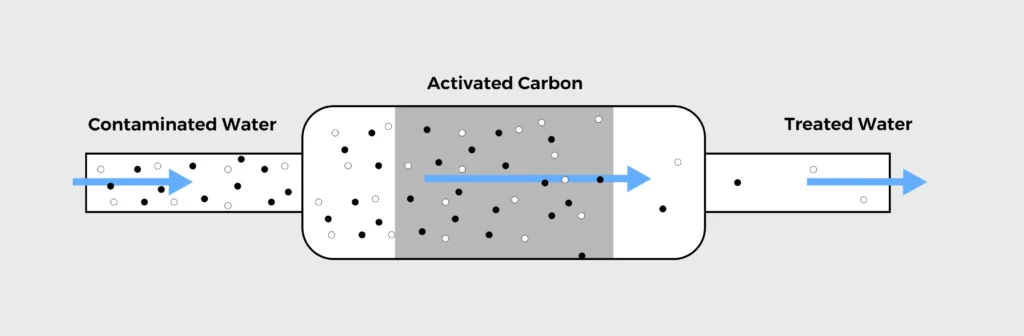
Certain molecules are naturally more attracted to carbon surfaces than others. Organic chemicals, chlorine compounds, and many treatment byproducts tend to bond easily with carbon. Salts and simple inorganic ions do not.
This selective behavior explains both the strength and the limitation of activated carbon filtration. It performs extremely well within its preferred range and very poorly outside it.
How Does Activated Carbon Filter Water Under Real Flow Conditions?
In actual filtration systems, water is always moving. Activated carbon does not sit and soak—it must perform while water flows through it.
As water passes through the carbon bed or structure, contaminants repeatedly collide with the carbon surface. When conditions are right, they remain attached. When conditions are not, they pass through untouched.
This is why flow rate, channeling, and cartridge design often matter more than the carbon material alone.
Why Activated Carbon Excels in Treated Tap Water
Activated carbon is especially effective in municipal tap water because the contaminants present match its strengths.
Most treated water contains:
- Chlorine or chloramine
- Low concentrations of organic byproducts
- Trace industrial or agricultural chemicals
These contaminants are present at low levels but strongly affect taste, odor, and long-term exposure. Activated carbon is well suited for this role, which explains its widespread use in residential filtration.
The Role of Pore Size in Filtration Performance
Not all activated carbon behaves the same way.
The internal pore structure determines which molecules can enter the carbon and which cannot. Smaller pores favor small organic compounds, while larger pores allow access to heavier or more complex molecules.
This is why different carbon sources and activation methods are chosen depending on the intended application. It is also why “activated carbon” alone is not a sufficient performance description.
How Does Activated Carbon Filter Water When Conditions Change?
Water quality is not static. Seasonal changes, source shifts, and pipe conditions all affect incoming water.
Activated carbon responds passively to these changes. Higher contaminant levels consume adsorption capacity faster. Higher temperatures reduce adsorption strength. Competing organic matter can occupy pore space.
Understanding these variables is essential when defining realistic filter lifespans rather than relying on fixed replacement intervals.
Why Activated Carbon Is Rarely Used Alone
Despite its effectiveness, activated carbon is almost never the only filtration stage in a complete system.
It is commonly combined with:
- Sediment filters to protect pore structure
- Ion exchange for dissolved ions
- Membrane filtration for microbial control
In these systems, activated carbon focuses on chemical reduction while other stages handle physical or ionic contaminants.
Cartridge Structure Shapes Carbon Performance
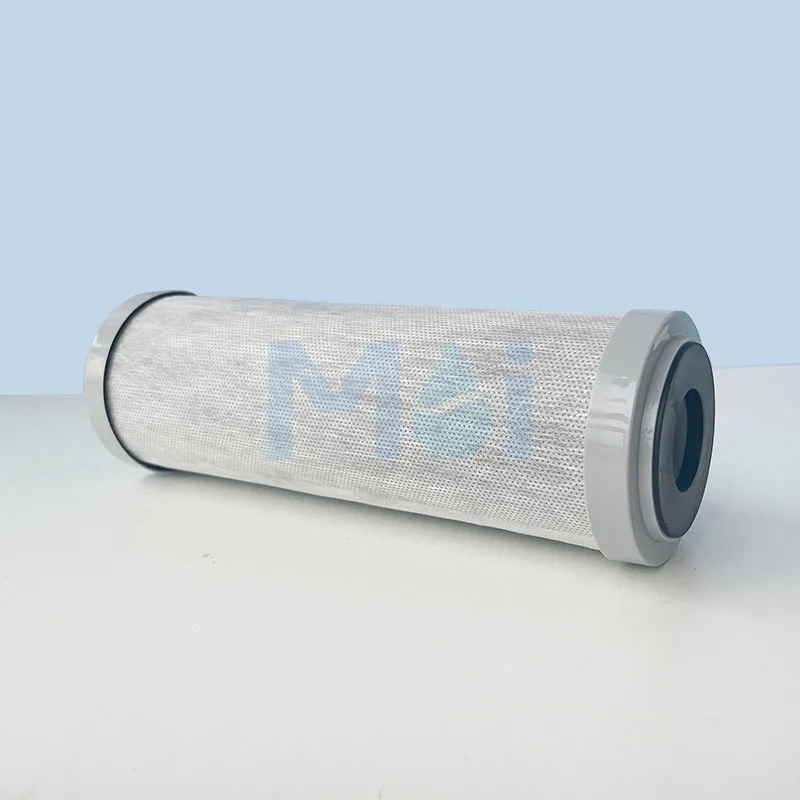
Loose carbon, compressed blocks, and carbon fiber structures all use the same basic material, yet behave very differently.
Structure controls:
- Water distribution
- Contact consistency
- Pressure drop stability
From a system design standpoint, how activated carbon is packaged often determines real-world effectiveness more than the carbon itself.
What Happens When Carbon Is Spent?
Activated carbon does not release contaminants back into water under normal conditions. Instead, its performance slowly declines as available adsorption sites are filled.
This gradual behavior makes carbon predictable and safe, but it also means reduced performance may go unnoticed without proper replacement schedules.
A Different Way to Answer: How Does Activated Carbon Filter Water?
Activated carbon filters water by selectively attracting certain chemical contaminants during normal flow conditions. Its effectiveness depends less on theoretical capacity and more on system design, water quality, and realistic usage patterns.
Viewed this way, activated carbon is not a universal solution—but it remains one of the most practical and dependable tools for improving everyday water quality when applied with clear expectations and proper design.