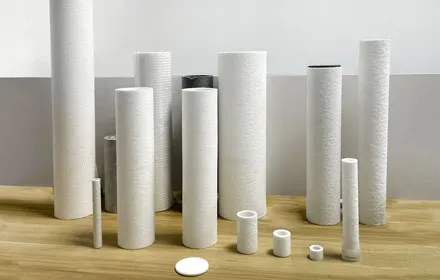
Water odor is a common problem in both residential and industrial water systems. Unpleasant smells—such as chlorine odor, musty smell, or chemical odor—often indicate the presence of dissolved organic compounds or disinfectant byproducts. One of the most effective technologies for removing these odors is the activated carbon water filter.
Activated carbon filter cartridges come in many forms, and activated carbon fiber is one of them.
How Do Carbon Fiber Filters Remove Odor?
Carbon fiber filters remove odor from water through a process called adsorption, where odor-causing molecules attach to the extremely porous surface of activated carbon fibers. Because ACF has a very large internal surface area and a high density of micropores, it can rapidly capture compounds responsible for unpleasant smells.
This mechanism is based on the scientific principle of Adsorption, where molecules adhere to a solid surface rather than dissolving into it.

Common Causes of Odor in Water
To understand why activated carbon fibers are useful, one must first understand the source of the odor.
1. Chlorine and Chloramine
Municipal water treatment plants commonly use disinfectants to kill microorganisms. Residual chlorine often produces a strong chemical smell.
2. Organic Compounds
Natural organic matter, algae byproducts, and industrial chemicals can create earthy or musty odors.
Many of these substances belong to a group known as Volatile Organic Compound (VOCs), which easily evaporate and produce noticeable smells even at low concentrations. According to the U.S. Geological Survey (USGS), VOCs can enter water supplies through industrial discharge, fuel leaks, and improper waste disposal.
3. Sulfur Compounds
Hydrogen sulfide and other sulfur-containing molecules can cause a “rotten egg” odor.
4. Biofilm Byproducts
Microbial activity inside pipes or storage tanks may generate odor-producing compounds.
Because these molecules are typically organic and hydrophobic, they are ideal targets for carbon-based adsorption filtration.
What Is an Activated Carbon Fiber Filter?
An activated carbon fiber (ACF) filter is a filtration cartridge made from carbonized and activated fiber materials that contain an extremely porous structure.
Compared with conventional activated carbon particles, ACF has several structural advantages:
| Feature | Activated Carbon Fiber | Granular Activated Carbon |
| Surface area | Very high | High |
| Adsorption speed | Very fast | Moderate |
| Pore structure | Uniform micropores | Mixed pore sizes |
| Contact efficiency | Excellent | Moderate |
The effectiveness of ACF filters is largely determined by their internal Surface Area. A higher surface area provides more active sites where odor molecules can attach.
The Science Behind Odor Removal
1. Microporous Structure
Activated carbon fiber contains millions of microscopic pores. These pores dramatically increase the available surface area, allowing the filter to capture odor molecules as water flows through the cartridge.
Typical ACF materials can reach surface areas exceeding 1000 m²/g.
2. Rapid Adsorption Kinetics
One key advantage of ACF over conventional carbon is faster adsorption.
Because the carbon is in fiber form, water can reach the adsorption sites more quickly. This results in:
Faster chlorine removal
Improved VOC adsorption reduced the contact time requirement。
In practical filtration systems, this means odor removal can occur even at relatively high flow rates.
3. Strong Molecular Attraction
Odor-causing molecules interact with carbon surfaces through several mechanisms:
Van der Waals forces
hydrophobic interactions
pore diffusion
These interactions cause odor molecules to adhere to the carbon surface rather than remaining in the water stream.
Step-by-Step: How a Carbon Fiber Filter Removes Odor
The filtration process typically follows these stages:
Step 1 – Water Enters the Filter
Water flows into the ACF cartridge through the outer layer of the filter.
Step 2 – Molecules Contact the Carbon Fiber Surface
As water moves through the fiber network, dissolved odor compounds come into contact with the carbon surface.
Step 3 – Adsorption Occurs
Odor molecules attach to the microporous carbon structure.
Step 4 – Clean Water Exits
The filtered water leaves the cartridge with significantly reduced odor and improved taste.
Because ACF filters provide a high density of adsorption sites, the removal process is extremely efficient.
Why Activated Carbon Fiber Is Effective for Odor Removal
From a manufacturing and material science perspective, several properties make ACF filters particularly effective.
High Surface Area
ACF materials provide a large number of adsorption sites for odor molecules.
Uniform Pore Structure
The micropores are evenly distributed, improving adsorption efficiency.
Fast Reaction Speed
ACF filters can remove chlorine and VOCs quickly even with short contact time.
Low Pressure Drop
Fiber-based carbon structures allow water to pass through more easily than densely packed carbon blocks.
These characteristics make ACF filters ideal for both drinking water systems and industrial filtration applications.
Applications of Carbon Fiber Filters in Odor Removal
Activated carbon fiber filters are widely used in various water treatment systems.
Drinking Water Purification
ACF filters improve taste and remove chlorine smell from tap water.
Reverse Osmosis Pre-Filtration
They are commonly used before RO membranes to remove oxidants and organic compounds.
Food and Beverage Processing
Odor-free water is essential in beverage manufacturing and food production.
Laboratory and Pharmaceutical Water Systems
High-purity water systems often use carbon filtration to remove trace organic contaminants.
Quality Factors That Affect Odor Removal Performance
Not all carbon fiber filters perform the same. From a water filter cartridge manufacturer’s perspective, several production factors influence filtration efficiency.
Raw Material Quality
The precursor fiber used during carbonization determines the final pore structure.
Activation Process
Controlled activation is required to create the optimal micropore distribution.
Fiber Density
Proper fiber density ensures sufficient adsorption capacity without restricting water flow.
Cartridge Design
Filter geometry and flow path affect contact time and overall performance.
Reliable manufacturers implement strict quality control processes to maintain consistent filtration performance.
FAQ
Do carbon fiber filters remove chlorine odor?
Yes. Activated carbon fiber can effectively adsorb chlorine and chlorinated compounds responsible for chemical smells in drinking water.
Are ACF filters better than traditional carbon filters?
In many cases, yes. Because of their fiber structure and high surface area, ACF filter cartridges typically provide faster adsorption and better efficiency than granular carbon filters.
How long does an ACF filter last?
Filter lifespan depends on several factors:
- water quality
- contaminant concentration
- system flow rate
In typical drinking water systems, replacement intervals range from 3 to 12 months.
Conclusion
Activated carbon fiber filters remove odor from water through an advanced adsorption process. The combination of high surface area, uniform micropores, and rapid adsorption kinetics allows ACF filters to effectively capture chlorine, VOCs, and other odor-causing compounds.
For water treatment systems where taste, smell, and organic contaminant removal are critical, activated carbon fiber filtration provides a highly efficient and reliable solution.