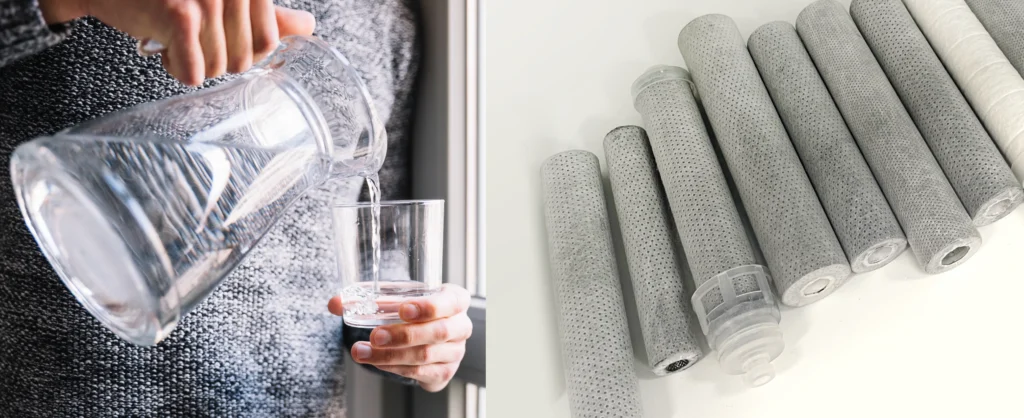
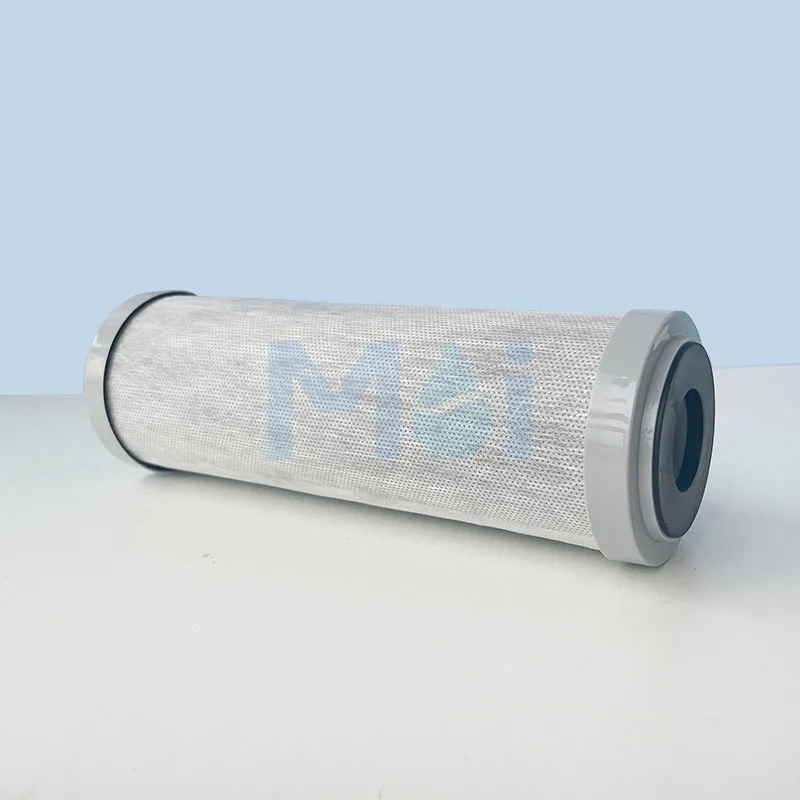
In water filtration systems, speed matters more than many people think. When a filter can remove contaminants quickly, it improves system efficiency and helps protect downstream equipment such as RO membranes. This is one of the main reasons why activated carbon fiber filters have become increasingly popular in recent years.
Many engineers have noticed that the activated carbon fiber filter cartridge adsorption kinetics are much faster than those of traditional carbon filters. In practical terms, this means contaminants like chlorine, unpleasant odors, and organic chemicals can be removed more quickly as water passes through the filter.
This advantage mainly comes from the unique structure of activated carbon fiber. Instead of using carbon particles or blocks, ACF filters rely on extremely fine carbon fibers with a highly porous surface. Because the pores are easier to access, contaminants can attach to the carbon surface faster.
In modern filtration design, this faster adsorption process can significantly improve overall water treatment performance.
Understanding Adsorption in Carbon Filtration
Most carbon filters work through a process known as Adsorption. This process allows contaminants in water to attach themselves to the surface of carbon materials.
Unlike absorption, where substances dissolve into a material, adsorption happens only on the surface. Because of this, the amount of surface area in a filter material plays a very important role in determining its performance.
Traditional carbon filters are typically made using Activated Carbon, which contains a network of microscopic pores. These pores trap contaminants such as chlorine, organic compounds, and taste or odor molecules.
However, the speed of adsorption depends not only on surface area but also on how easily contaminants can reach those pores.
Why Activated Carbon Fiber Filter Cartridge Adsorption Kinetics Are Faster
Typical activated carbon fiber materials have a surface area between 1000 and 2500 m² /g, which is significantly higher than many conventional granular carbons that often range between 800m²/g and 1200 m² /g.
These properties directly contribute to faster activated carbon fiber filter cartridge adsorption kinetics.
Several structural advantages explain why adsorption happens faster in ACF filters.
Large Surface Area Means More Active Sites
One of the biggest advantages of activated carbon fiber is its extremely large surface area.
For example, 1 gram of ACF material can provide up to 2000m² of adsorption surface. To visualize this, that is roughly the size of several tennis courts combined.
With more available surface area, contaminants have many more places to attach. This increases both adsorption capacity and adsorption speed.
Because adsorption occurs on the surface, this high surface area is a major reason why ACF filter cartridge adsorption kinetics are so efficient.
Short Diffusion Distance
Another reason ACF filters work quickly is the short distance contaminants need to travel before reaching adsorption sites.
In granular carbon filters, contaminants often need to move deep into carbon particles before reaching the internal pores. This diffusion process can slow down the overall adsorption rate.
Activated carbon fiber works differently. The diameters of these fibers are usually only 10–20μm, and many micropores are located very close to the fiber surface.
Because of this structure, contaminants in the water can reach adsorption sites almost immediately after contacting the fiber surface.
Faster Mass Transfer
Mass transfer refers to how quickly contaminants move from water to the carbon surface.
In activated carbon fiber filter cartridges, water flows through a network of fibers rather than through tightly packed carbon granules. This structure allows water to contact the carbon surface more evenly.
As a result, contaminants can reach adsorption sites more efficiently, which further improves the activated carbon fiber filter cartridge adsorption kinetics.
In practical filtration systems, this often means:
- Faster chlorine removal
- Shorter contact time requirements
- Higher adsorption efficiency
Performance Comparison with Granular Carbon
To better understand the benefits of ACF filters, it is useful to compare them with traditional granular activated carbon.
| Feature | Activated Carbon Fiber | Granular Activated Carbon |
| Surface Area | 1000–2500 m²/g | 800–1200 m²/g |
| Fiber/Particle Size | ~10–20 μm fiber | 0.5–2 mm granules |
| Adsorption Speed | Very fast | Moderate |
| Diffusion Distance | Very short | Longer |
| Flow Resistance | Lower | Medium |
Because of these differences, many engineers choose activated carbon fiber filters when fast adsorption is required.
Real Filtration Performance
In practical testing, activated carbon fiber filters often demonstrate impressive removal efficiency.
For example:
Chlorine removal efficiency can exceed 95–99% under typical operating conditions.
Many ACF materials can adsorb several hundred milligrams of organic contaminants per gram of carbon.
Breakthrough times in ACF filters are often significantly longer compared with filters using lower surface area carbon materials.
These results explain why ACF filters are increasingly used in high-performance water treatment systems.
Where Faster Adsorption Matters Most
The faster activated carbon fiber make these filters especially useful in several industries.
RO Pre-Filtration
Reverse osmosis membranes are sensitive to chlorine. Even low concentrations can damage the membrane surface.
ACF filters can remove chlorine quickly, helping protect RO systems and extend membrane life.
Drinking Water Treatment
Municipal water often contains residual chlorine used for disinfection. Activated carbon fiber filters remove this chlorine quickly while also reducing taste and odor issues.
Food and Beverage Production
Water quality has a direct impact on beverage taste. Fast adsorption helps remove unwanted organic compounds before water enters production processes.
Industrial Water Systems
Many industrial processes require clean water with minimal organic contaminants. ACF filters help achieve this efficiently.
Design Advantages of Activated Carbon Fiber Filter Cartridges
Besides faster adsorption, ACF filters offer several practical design advantages.
Lower Pressure Drop
Because the filter media is made from fibers rather than dense carbon blocks, water can flow through the filter more easily. This often results in lower pressure loss across the cartridge.
Efficient Use of Carbon Material
Since adsorption occurs quickly, ACF water filters can often achieve good removal performance with relatively compact designs.
Stable Filtration Performance
High-quality manufacturers design ACF filter cartridges with consistent fiber distribution and stable structural support.
For example, companies like Damai filtration manufacture activated carbon fiber filter cartridges using controlled production processes to ensure consistent pore structure and reliable filtration performance for industrial and commercial applications.
Conclusion
The faster activated carbon fiber filter cartridge mainly result from the unique physical structure of activated carbon fiber. Its extremely large surface area, short diffusion paths, and highly accessible micropores allow contaminants to reach adsorption sites quickly.
Compared with traditional carbon materials, activated carbon fiber offers faster contaminant removal and more efficient filtration performance. These advantages make ACF water filters particularly suitable for applications such as drinking water treatment, RO pre-filtration, and industrial water purification.
As filtration technologies continue to develop, activated carbon fiber filter cartridges are becoming an increasingly important solution for systems that require fast, efficient, and reliable adsorption performance.