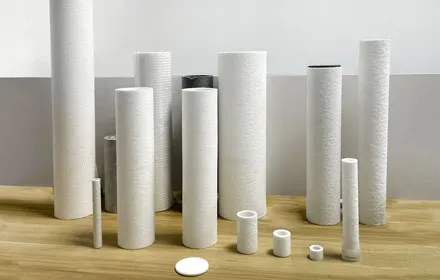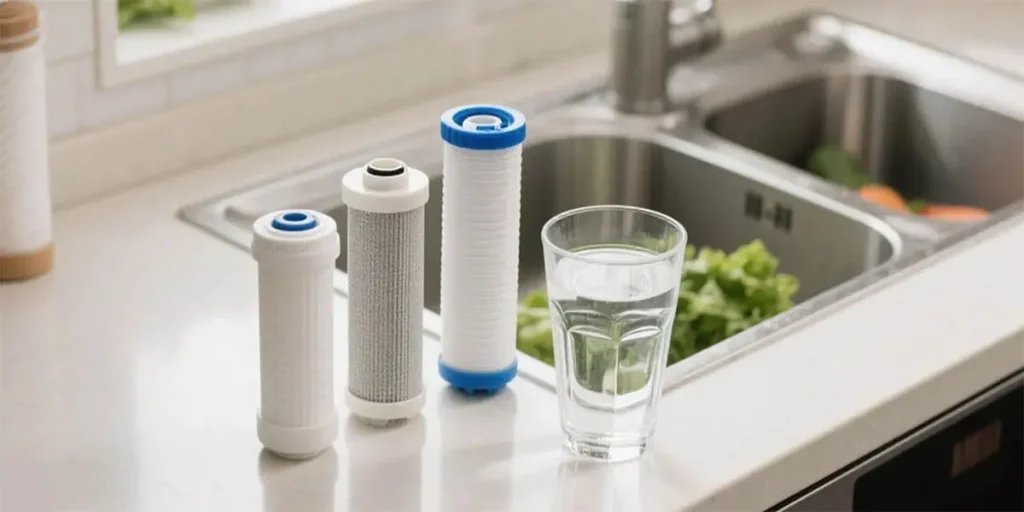
In water filtration systems, how well a filter cartridge works directly affects the quality of the water, how long the system lasts, and how much it costs to maintain. There are many types of sediment filters available now. Among them, the gradient density filter cartridge has become a top choice for both homes and factories.
Its special structure lets it handle different sizes of particles better than old-style filters. This makes it an important part of modern pre-filtration systems.
What Is a Gradient Density Filter Cartridge?
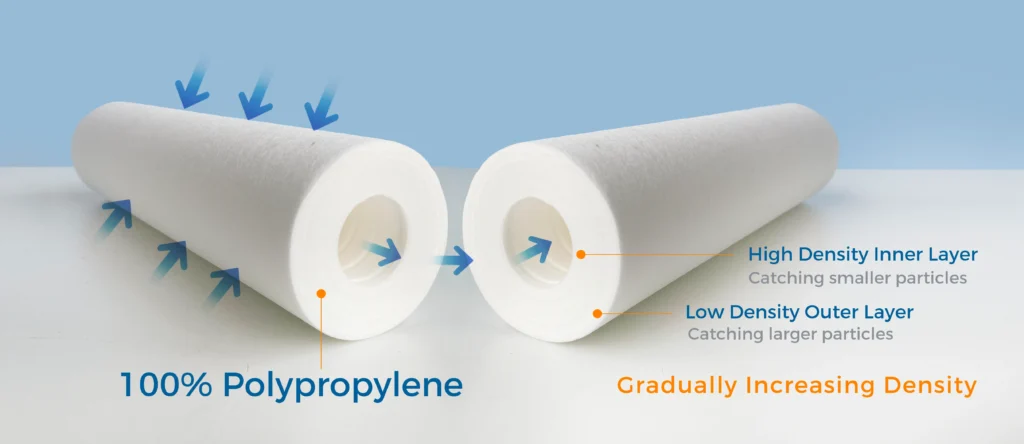
A gradient density filter cartridge is a type of depth filter. It has a structure where the density gets gradually higher— the outer layer is more porous (has more small holes), and the inner layers are denser (have fewer, smaller holes).
This design lets the filter catch pollutants all through its layers, not just on the surface.
Most of these cartridges are made from melt blown polypropylene or similar man-made fibers. The change in density happens during the manufacturing process. This makes a filter that can catch different sizes of particles in one pass.
How Gradient Density Improves Filtration Performance
The biggest advantage of a gradient density filter is how it handles particles. When water enters the cartridge, larger particles get stuck in the outer layers. These layers are less dense and have bigger holes.
As water moves inward, smaller particles are caught by the tighter, denser layers.
This step-by-step filtration stops the filter from clogging too soon. That’s a common problem with single-density filters. Instead of blocking up on the surface, pollutants spread through the filter material.
Because of this, the cartridge keeps a steady flow of water and works well for a longer time.
Why Gradient Density Filters Last Longer
One of the most obvious benefits of this design is that it lasts longer. Particles get trapped in multiple layers, so the filter uses its whole volume—not just the outer surface.
This makes it much better at holding dirt and debris.
In real use, this means you don’t have to replace it as often, and maintenance costs are lower. For systems like reverse osmosis pre-filtration or whole-house filtration (where there’s a lot of sediment), this durability is especially useful.
Typical Materials and Manufacturing
Most gradient density filter cartridges are made using the melt blown process. This process lets manufacturers control the thickness of the fibers and the layers very precisely.
Polypropylene is the most common material. It resists chemicals, is cheap, and works well with drinking water systems.
The structure isn’t put together layer by layer by hand. Instead, it forms a continuous gradient during production. This ensures the filter works consistently and has no weak spots.
Where Gradient Density Filters Are Used
Gradient density filter cartridges are widely used where removing sediment is important. They are often used as pre-filters in reverse osmosis systems. They help protect the membranes from clogging.
In whole house systems, they remove sand, rust, and floating solids before water reaches other filters or appliances.
Industries like food processing, drink making, and manufacturing also use these filters to keep water quality consistent. In well water systems (where sediment levels are often higher), gradient density filters are a reliable and low-cost solution.
Comparing Gradient Density and Standard Filters
Compared to standard sediment filters (which have the same density all over), gradient density cartridges work more evenly and efficiently. Traditional filters usually trap most particles on the surface.
This leads to faster clogging and less water flow. On the other hand, gradient density filters spread particles through the material. This improves both performance and how long the filter lasts.
You might not notice the difference at first. But over time, it means fewer replacements, better protection for the system, and more stable operation.
Choosing the Right Gradient Density Filter
Picking the right filter depends on your specific use and water conditions. The micron rating is key—it decides the size of particles the filter can remove.
Lower micron ratings mean finer filtration. But if it’s not matched to your system, it might reduce water flow.
You should also consider the filter size and whether it fits standard housings. The common sizes are 2.5″ x 10″ and 4.5″ x 20″, they are widely used in home and commercial systems.
For most pre-filtration needs, a 5-micron gradient density filter is a good balance between efficiency and water flow.
Conclusion
The gradient density filter cartridge is a better way to filter sediment. It combines a layered structure with step-by-step particle removal.
Compared to traditional filters, it works better, lasts longer, and performs more consistently.
For filter cartridge manufacturers, system installers, and users, it’s an easy way to improve filtration systems without making them more complicated. As people demand better water quality, this type of filter will become more and more important for both homes and factories.