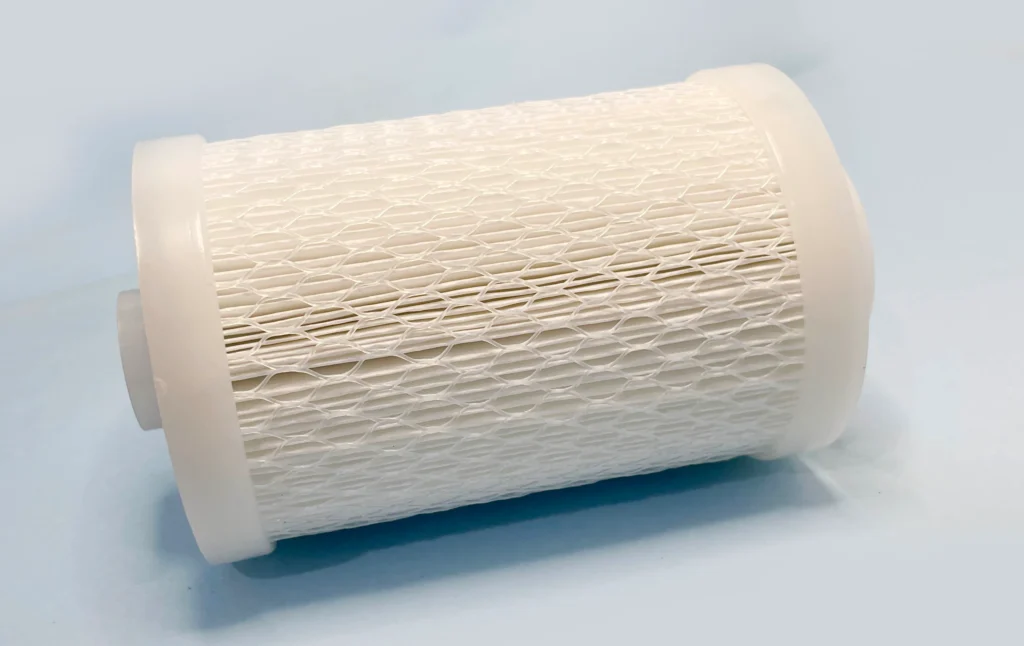
Why Does a UF Water Filter Hardly Reduce TDS?
The Core Principle
An ultrafiltration (UF) membrane removes suspended solids, colloids, bacteria, rust, sediment, and other relatively large contaminants. However, it cannot remove dissolved inorganic salts and mineral ions, which make up most of the Total Dissolved Solids (TDS) in water.
1. The Membrane Pore Size Is Much Larger Than Dissolved Ions
A UF membrane has a pore size of approximately 0.01–0.1 microns, allowing it to trap particles, microorganisms, and macromolecules.
However, dissolved minerals such as calcium, magnesium, sodium, chloride, and bicarbonate ions are thousands of times smaller than the membrane pores. These ions pass freely through the membrane, so the amount of dissolved solids remains almost unchanged, resulting in little or no reduction in TDS.
2. UF Uses Physical Filtration Instead of Reverse Osmosis
UF relies solely on normal water pressure and a physical sieving process to remove contaminants.
Unlike reverse osmosis, UF does not use a high-pressure membrane separation process, so dissolved minerals remain in the filtered water.
3. Understanding What TDS Actually Measures
TDS stands for Total Dissolved Solids, referring to dissolved minerals, salts, and other inorganic ions in water. It does not include suspended particles such as sediment, rust, bacteria, or other insoluble contaminants.
As a result, UF can make water clearer and safer by removing particulate contaminants, but it does not significantly change the TDS reading.
In short: UF purifies water by removing physical impurities — not dissolved minerals — so the TDS value remains nearly the same.

UF vs. RO Water Filters: The Key Differences
1. Filtration Technology and Membrane Pore Size
RO (Reverse Osmosis): RO membranes have pores of approximately 0.0001 microns (0.1 nanometers). Under pressure, only water molecules can pass through the membrane, while most dissolved salts, heavy metals, fluoride, nitrates, and scale-forming minerals are rejected and discharged as wastewater. As a result, RO significantly lowers TDS.
UF (Ultrafiltration): UF membranes use physical filtration to remove suspended contaminants and microorganisms. Because dissolved ions can pass through the membrane, UF does not reduce TDS and produces no wastewater.
2. TDS and Scale Formation
RO: The purified water has a much lower TDS level, so boiling the water produces little or no limescale. This is especially beneficial in hard water areas.
UF: The TDS remains close to that of the source water. Calcium and magnesium remain in the water, so scale can still form when the water is heated.
3. Electricity, Wastewater, and Water Pressure
RO Systems
- Require electricity to power a booster pump.
- Produce wastewater (typically a wastewater ratio of 1.5:1 to 3:1, depending on the system).
- Require adequate inlet water pressure.
UF Systems
- Require no electricity.
- Produce no wastewater.
- Operate under relatively low water pressure, making them suitable for gravity-fed systems, rooftop water tanks, and rural homes with low water pressure.
4. Filter Configuration and Service Life
RO Water Filter
Typical filtration stages include:
- PP sediment filter
- Activated carbon pre-filter
- RO membrane
- Post carbon filter
- The RO membrane typically lasts 18–36 months, while pre-filters usually require replacement every 3–6 months.
UF Water Filter
A typical UF system includes:
- PP sediment filter
- Activated carbon filter
- Hollow fiber UF membrane
- The UF membrane can often be flushed to extend its service life, and replacement costs are generally lower than those of an RO system.
5. Water Quality Characteristics
RO Purified Water
Advantages
- Removes most heavy metals, nitrates, fluoride, chlorine, bacteria, viruses, and scale-forming minerals.
- Provides consistently high water quality.
- Ideal for hard water, well water, or areas with poor water quality.
- Suitable for drinking, baby formula, coffee machines, tea brewing, and ice makers.
Disadvantages
- Removes beneficial minerals along with contaminants.
- Some people find the taste less natural.
- Produces wastewater.
UF Purified Water
Advantages
- Retains naturally occurring minerals.
- Preserves the original taste of the water.
- Produces no wastewater.
- Provides a higher flow rate.
- Well suited for washing vegetables, cooking, and general household use.
Disadvantages
- Cannot remove dissolved heavy metals, fluoride, nitrates, or hardness minerals.
- May not provide sufficient purification if the source water contains excessive levels of dissolved contaminants.
6. Recommended Applications
UF Is Best For
- Municipal tap water that already meets drinking water standards.
- Areas where the source water has a TDS below approximately 300 ppm.
- Homes that prefer no electricity or wastewater.
- Rental properties or simple household filtration.
- Users who prefer water with its natural mineral content.
RO Is Best For
- Hard water with severe limescale problems.
- Well water or groundwater.
- Water sources with elevated TDS or potential heavy metal contamination.
- Homes with aging plumbing systems.
- Drinking water applications where maximum purification is desired.
7. Long-Term Operating Cost
UF: Operating costs are relatively low because there is no electricity consumption, no wastewater, and replacement filters are generally inexpensive.
RO: Operating costs are higher due to electricity use, wastewater, and periodic RO membrane replacement.
Common Misconceptions
Myth 1: UF Water Is Always Healthier
This is only true when the source water is already safe to drink. If the water contains dissolved contaminants such as heavy metals or nitrates, UF alone may not provide adequate protection.
Myth 2: RO Water Contains No Minerals and Is Unsafe for Long-Term Consumption
There is no scientific evidence that drinking RO water is harmful for healthy individuals. Most essential minerals come from food rather than drinking water, and properly treated RO water meets drinking water standards in many countries.
Myth 3: Is There a Way to Reduce Scale While Retaining Minerals?
Yes. Some homeowners choose an RO system with a remineralization filter to restore beneficial minerals after purification. Another option is to combine a water softener with a UF filtration system, reducing hardness while maintaining efficient particulate filtration.
UF vs RO Water Filter Comparison
| Feature | UF Water Filter | RO Water Filter |
| TDS Reduction | Little or none | Significant |
| Limescale | Still forms | Greatly reduced |
| Electricity | Not required | Required |
| Wastewater | None | Yes |
| Heavy Metal Removal | No | Excellent |
| Mineral Retention | Yes | Most minerals removed |
| Operating Cost | Lower | Higher |
| Best For | Municipal water with acceptable quality | Hard water and high-TDS or contaminated water |