An RO post ACF filter is one of the most overlooked yet important components in modern RO water purifiers. While the RO membrane handles deep purification by removing contaminants, heavy metals, salts, and bacteria, the RO post ACF filter focuses on improving the final drinking experience.
Many homeowners assume the RO membrane alone is enough. However, water that passes through an RO system can sometimes taste flat or develop slight odors from storage tanks and internal tubing. This is exactly where an reverse osmosis post ACF filter becomes essential.
In this guide, we will explain what an RO post ACF filter does, why many premium RO systems include one, and whether it is truly necessary for your drinking water system.
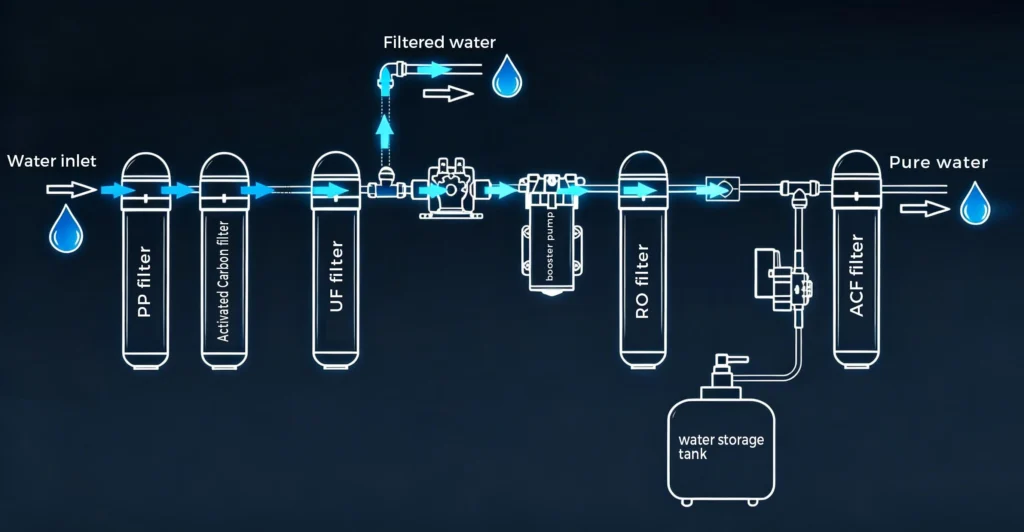
What Is an RO post ACF filter?
An RO post activated carbon filber filter is a filter installed after the RO membrane in a reverse osmosis water purifier. Its primary role is not deep filtration, but final-stage water polishing.
Most RO post ACF filter units use high-quality coconut shell activated carbon to:
- Improve water taste
- Remove unpleasant odors
- Reduce plastic or tank smells
- Enhance drinking freshness
This filter is commonly known as:
- Post carbon filter
- T33 filter
- Inline carbon filter
- Final polishing filter
In many modern systems, the post-carbon filter is the last stage before water reaches the faucet.
Why RO Water Still Needs a Post Carbon Filter
Many people ask: “If the RO membrane already purifies water so thoroughly, why add an RO post carbon fiber filter?”
The answer is simple. The RO membrane focuses on removing contaminants, while the RO post ACF filter focuses on user experience.
After RO filtration, water may still absorb minor odors from storage tanks, plastic tubing, rubber components, and internal connectors.
Because RO water contains very low dissolved solids, it is more sensitive to odors and taste changes. A post ACF filter helps eliminate these unwanted flavors and provides cleaner-tasting water.
Without a post filter, purified water may taste dull or slightly stale, especially in storage-tank systems.
Main Functions of an RO post ACF filter
1. Improves Water Taste
The biggest advantage of an RO post ACF filter is taste enhancement.
RO water can sometimes feel:
- Flat
- Empty
- Too pure
- Less refreshing
The activated carbon inside the RO post filter helps create a smoother and fresher taste.
2. Removes Odors
An RO post ACF filter absorbs:
- Plastic smells
- Tank odors
- Pipe odors
- Residual organic compounds
This is especially important in systems with storage tanks where water remains inside the purifier for extended periods.
3. Enhances Final Water Quality
Although the RO membrane removes most pollutants, the post-ACF filter acts as a final polishing stage before drinking.
This creates a better overall user experience.
4. Improves Consumer Satisfaction
Many users judge water quality by taste and smell rather than laboratory test results.
Damai high-quality post ACF filter cartridge significantly improves perceived water quality.
Types of RO post ACF filter Systems
Standard Coconut Shell Carbon Filter
This is the most common RO post ACF filter design.
Benefits include:
- Excellent adsorption
- Better taste
- Low pressure drop
- Affordable replacement cost
Mineral Post Carbon Filter
Some systems combine mineralization with an RO post carbon filter.
These filters may add:
- Calcium
- Magnesium
Their main purpose is improving taste rather than providing meaningful nutritional benefits.
Antibacterial Post Carbon Filter
Premium systems may use an antibacterial activated carbon water filter containing:
- Silver ions
- Antimicrobial materials
These help reduce bacterial growth inside the filter.
UV-Integrated Post Carbon Filter
Some high-end systems combine UV sterilization with an RO post-carbon filter for additional hygiene protection.
This is especially common in:
- Commercial systems
- Tankless RO dispensers
- Smart water purifiers
Is an RO Post Carbon Filter Really Necessary?
The answer depends on your water purifier design and expectations.
An RO post ACF filter is highly recommended if:
- Your system has a storage tank
- You notice unusual water odors
- You care about taste quality
- Your purifier has long internal tubing
- You use a traditional RO setup
However, some tankless instant-heating Reverse osmosis systems may have less need for an RO post ACF filter because water spends less time inside the machine.
One Important Problem: Bacterial Growth
A post filter cartridge can also become a bacterial growth point if not replaced regularly.
Since RO water contains almost no chlorine, bacteria can grow more easily inside expired carbon filters.
This is why replacing an RO post ACF filter on schedule is extremely important.
Common signs of an old filter include:
- Sweet or strange taste
- Musty odor
- Reduced freshness
- Bad aftertaste
Most manufacturers recommend replacing post ACF filter cartridge every 6 to 12 months.
RO post ACF filter vs Pre Carbon Filter
Many people confuse pre-carbon filters with an RO post ACF filter.
They serve completely different purposes.
Pre Carbon Filter
Main job:
- Remove chlorine
- Protect the Reverse osmosis membrane
- Reduce large organic contaminants
Post ACF filter
Main job:
- Improve taste
- Remove odors
- Polish final drinking water
Both filters are important in a complete RO purification system.
Final Thoughts
A post ACF filter may not be the core purification component in an RO system, but it plays a major role in the final drinking experience.
The RO membrane determines water safety, while the Reverse osmosis post activated carbon filter determines how pleasant the water tastes and smells.
For most modern RO water purifiers, especially systems with storage tanks, a post ACF filter is absolutely worth having. It helps deliver fresher, cleaner, and more enjoyable drinking water every day.