Many homeowners ask the same question: Do I need a water purifier for my home? Tap water seems clean on the surface, but invisible contaminants, strange tastes, and hidden pipe pollution make people doubt household drinking water safety. There is no one-size-fits-all answer for water purification. Buying an unnecessary water purifier wastes money, while skipping it when needed risks your family’s health.
In this guide, we break down whether I need a water filter from real user pain points and professional water technology perspectives. We provide a simple checklist, no complicated jargon, to help you make a definite judgment in 5 minutes.
Why Most People Doubt: Is a Home Water Purifier Really Necessary?
A large number of homeowners hesitate to install a water purifier for two main reasons. First, they believe local tap water meets national drinking standards, so extra purification is redundant. Second, they worry about high purchase costs, tedious filter replacement, and complicated maintenance of water purifiers.
However, qualified tap water does not equal safe drinking water for direct use. Municipal water treatment plants eliminate major harmful substances, but water will pick up secondary pollutants during transportation through aging water pipes. Rust, sediment, residual chlorine and heavy metals easily remain in household tap water. This is the core reason why countless users search do I need a water purifier for my home every month.
6 Obvious Signs You Need a Water Purifier for Your Home
If you have any of the following situations in your house, the answer to “do I need a water purifier for my home” is definitely YES. These intuitive signs do not require professional water testing, and you can easily observe them in daily life.
1. Tap Water Has Chlorine or Metallic Taste

Does your tap water smell like bleach or have an obvious metallic taste? Municipal water plants add residual chlorine to kill bacteria, and aging iron pipelines leave metal traces. A qualified home water purifier with activated carbon filters can effectively absorb residual chlorine and peculiar odors, greatly improving water taste.
2. White Residue and Scale After Boiling Tap Water
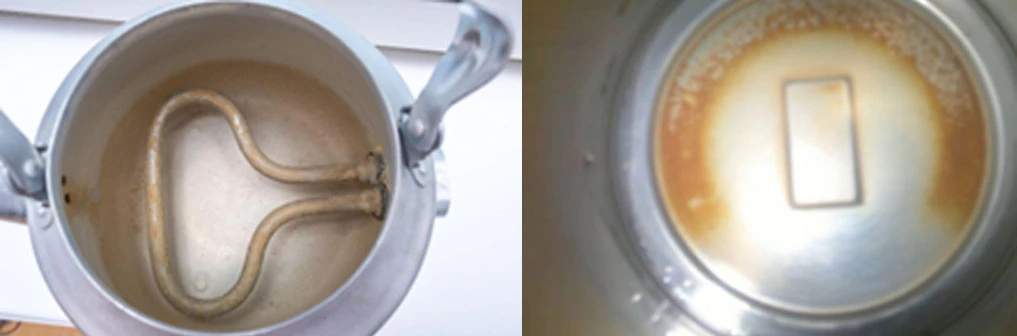
White floating substances or hard scale at the bottom of kettles are typical manifestations of excessive calcium and magnesium ions (hard water). Long-term use of hard water will damage water heaters and coffee machines, and dry out human skin. If you hate stubborn scale, you need a household water purifier with softening or reverse osmosis filtration function.
3. Visible Sediment, Rust or Floating Impurities
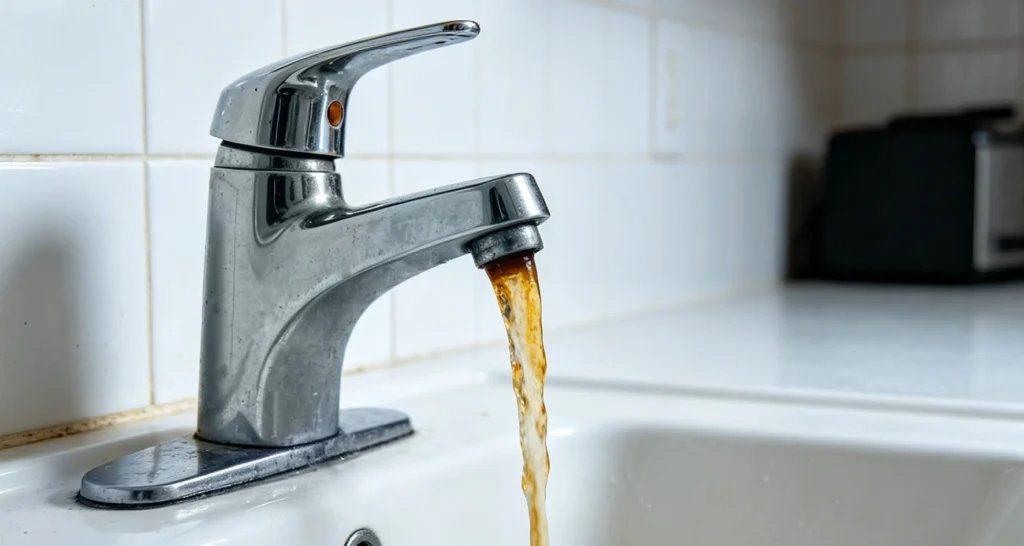
When turning on the faucet, you occasionally see yellow rust, tiny particles or suspended sediments. This is caused by aging residential water pipelines. These visible impurities directly damage human digestive tracts, and a pre-filter plus terminal water purifier is the most cost-effective solution.
4. Have Vulnerable Family Members
If there are infants, pregnant women, the elderly or people with low immunity in your family, never ignore water safety. Heavy metals, bacteria and microplastics in unfiltered tap water are more likely to cause physical discomfort for vulnerable groups. Installing a water purifier is the simplest health protection measure for your family.
5. Frequent Skin Itching After Bathing
Residual chlorine in tap water will destroy the skin’s protective oil layer. If you often feel dry, itchy skin or have fragile hair after bathing, it means your home water contains excessive residual chlorine. A whole-house or terminal water purifier can reduce chlorine content and protect your skin and hair.
6. Old Residential Buildings or Rural Tap Water
Houses with a service life of more than 15 years generally have aging water supply pipes, with serious secondary pollution. Rural well water and self-built tap water lack strict centralized purification, containing more bacteria and sediment. For these households, the answer is unquestionable.
7. TDS reading is higher than expected
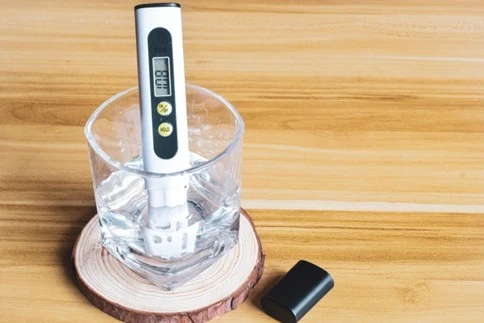
If you want a more “data-based” way to check your water, this is it. A TDS meter shows how many dissolved solids are in your water—things like:
- Minerals
- Salts
- Metals
- Other dissolved particles
You just dip it in water and get a number. Here’s a simple guide:
- 0–50 ppm → very clean
- 50–150 ppm → good
- 150–300 ppm → okay
- 300–500 ppm → getting high
- 500+ ppm → you probably need filtration
Now, TDS alone doesn’t tell the full story, but if your number is high, it usually means your water has more “stuff” in it than ideal.
What Contaminants Does a Home Water Purifier Remove?
To help you avoid blind purchase, we analyze the core purification technology in plain language, explaining what a home water purifier can filter out and solving user confusion from a technical standpoint.
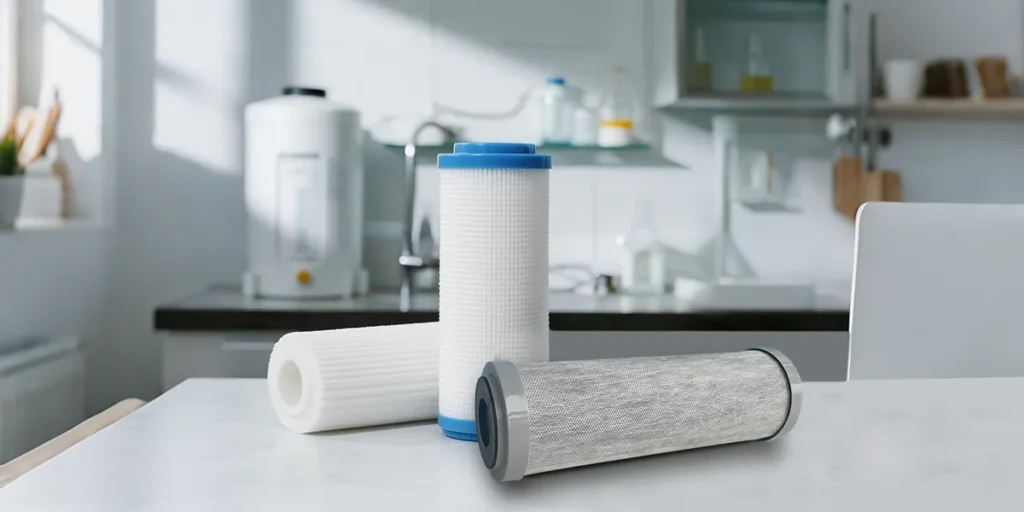
1. PP Filter (Basic First-Stage Filtration)
The PP filter is the most fundamental part of almost all home water purifiers. It mainly filters large impurities such as rust, sand, sediment and floating particles. It protects the follow-up filter elements and extends the whole machine’s service life. Every household water purifier needs a standard PP filter as the first line of defense.
2. Activated Carbon Filter
It absorbs residual chlorine, odor, organic pollutants, and some pesticides. Suitable for families who only pursue improved water taste.
3. Ultrafiltration Membrane
It retains mineral elements while filtering bacteria and sediment. It is favored by users who like the mineral water taste, with no need for electricity and low maintenance costs.
4. RO Filter (Deep Purification)
With a filtration accuracy of 0.0001 micron, it can intercept heavy metals, bacteria, viruses, microplastics and scale. RO water purifiers are the most mainstream household products, suitable for families with high requirements for drinking water safety.
When Do You NOT Need a Home Water Purifier?
To avoid unnecessary consumption, we clearly list the situations where you can skip buying a water purifier.
- You live in a newly built community with brand-new stainless steel water pipes, and local tap water has passed high-standard purification with no peculiar smell or impurities.
- You exclusively drink qualified bottled mineral water and never use tap water for direct drinking or cooking.
- Your home is equipped with a professional whole-house water treatment system when decorated, which covers all water purification needs.
Practical Buying Tips for First-Time Water Purifier Users
After confirming that you need a water purifier for your home, do not blindly pursue high-priced products. Follow these user-friendly tips to select a cost-effective device:
- Match local water quality: Hard water areas prioritize RO water purifiers to reduce scale; low-impurity urban tap water can choose ultrafiltration models.
- Focus on filter replacement cost: Many cheap water purifiers have extremely high later filter replacement fees. Confirm the annual maintenance cost before purchasing.
- Avoid over-purification: Ordinary families do not need expensive whole-house purification systems. Terminal kitchen water purifiers can meet daily drinking and cooking needs.
Final Verdict: Should You Install a Home Water Filter?
To sum up, the answer to whether I need a water purifier for my home depends on your water quality, living environment and family population. If you have strange water taste, visible impurities, aging water pipes, or vulnerable family members, installing a water purifier is a low-cost and high-return health investment.
If your tap water is clear, tasteless, and transported through new pipelines, you can properly give up purchasing to save costs. Never follow the trend blindly, and never ignore hidden water pollution risks.
Quick Decision Checklist
✅ Strange taste/odor of tap water → Buy
✅ White scale after boiling → Buy
✅ Aging water pipes/old community → Buy
✅ Pregnant women, infants, and the elderly at home → Buy
✅ New pipeline + pure bottled water for daily use → No need to buy
Conclusion
Every homeowner who searches do I need a water purifier for my home cares about family water safety. Instead of listening to vague advertising promotion, judge objectively through our intuitive signs and technical analysis. A suitable home water purifier does not need a high price, but it must match your household water quality needs.