A lot of people buy a TDS meter after installing a water purifier because they believe the number directly represents water quality. The most common idea is simple: the lower the TDS, the better the water. This is especially common with RO systems, where users often compare TDS readings to judge filtration performance.
But in reality, water quality is much more complicated than a single number. A low TDS reading does not automatically mean the water is safer, cleaner, or healthier to drink.
What Does TDS Actually Measure?
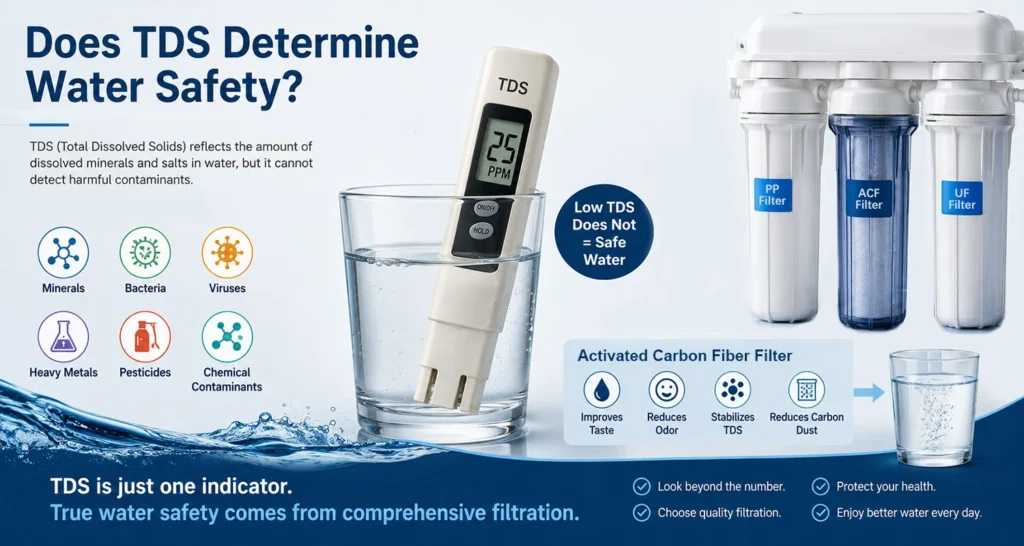
TDS stands for “Total Dissolved Solids.” In normal household use, a TDS meter does not directly detect contaminants or harmful substances. It simply measures electrical conductivity and converts that into a TDS number.
In simple terms, TDS mainly reflects the amount of dissolved conductive ions in water. These may include minerals such as calcium, magnesium, sodium, and potassium. This also means there are many things a TDS meter cannot detect, including bacteria, viruses, organic pollutants, pesticides, and many chemical contaminants. So even if the TDS number is low, it does not automatically mean the water is completely safe.
Does TDS Determine Water Safety in Natural Water Sources?
Many people misunderstand low TDS water as “pure water,” but that can be misleading. Some natural water sources may have relatively low TDS readings while still containing microorganisms, industrial pollution, algae, or organic contamination. In other words, the water may look unsafe or even smell unusual, but the TDS number itself could still appear low.
The opposite can also happen. Some mineral waters have naturally higher TDS because it contains more dissolved minerals, but that does not automatically make them harmful.
This is why professional drinking water testing never relies on TDS alone. Real water quality standards usually include many different testing items, such as bacteria, heavy metals, chemical contaminants, odor, turbidity, and VOCs.
Can TDS 0 Water Still Be Unsafe?
Yes. A TDS reading of zero only means there are almost no dissolved conductive ions in the liquid. It does not prove the liquid is safe to drink. Some substances do not significantly affect electrical conductivity, which means a liquid could still contain harmful compounds even when the TDS reading is extremely low.
That is why a TDS meter should only be used as a reference tool, not as a complete water safety test.
Why RO Systems Usually Produce Very Low TDS Water
RO systems are designed to remove dissolved substances with very high filtration precision. That is why RO water usually has a much lower TDS reading compared to normal tap water. In simple terms, the final TDS of RO water is affected by three main factors:
- The original tap water quality
- The RO membrane rejection rate
- The post-carbon filter cartridge
This is also why the same RO system may produce different TDS readings in different areas. The incoming tap water itself may already contain very different mineral levels. In many RO systems, the post-carbon filter can also slightly affect the final TDS reading. Some activated carbon materials may release small amounts of minerals or fine carbon particles into the water, especially lower-quality carbon cartridges.
Why Post Carbon Filter Quality Matters
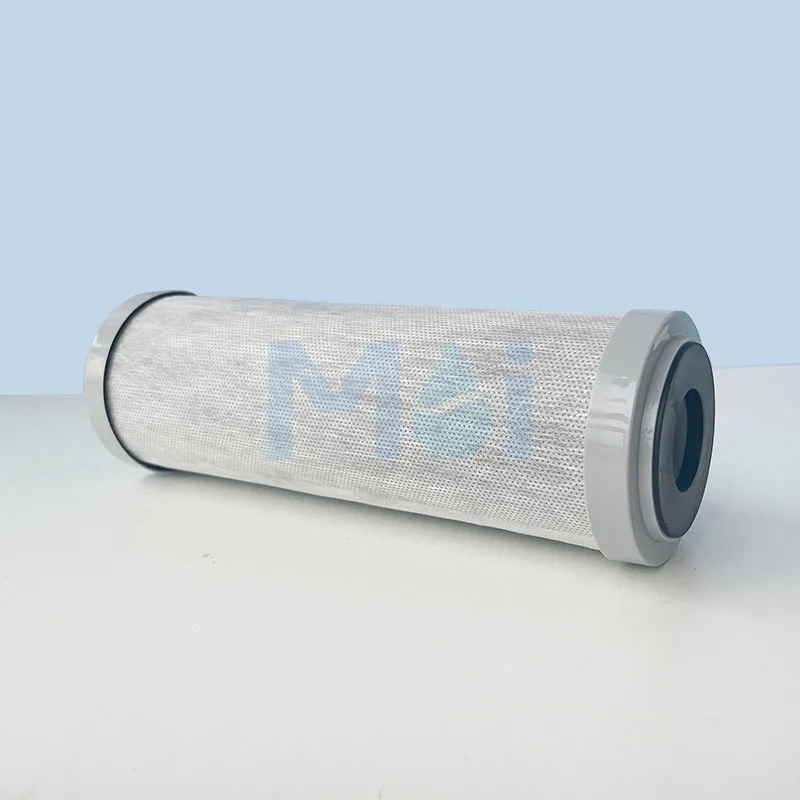
Many users focus only on the RO membrane while ignoring the post-carbon filter cartridge behind it. In reality, the final taste, odor, and stability of RO water are often closely related to the post-filter material.
Low-quality carbon cartridges may cause issues such as:
- Unstable TDS readings
- Carbon dust release
- Plastic-like taste
- Unpleasant odor
- Reduced filtration consistency
This is why many high-end RO systems use better activated carbon materials with lower impurity release and more stable performance.
For example, acid-washed activated carbon and high-quality ACF filter cartridges are often used in post-filtration because they help reduce odor, improve taste, and minimize unwanted TDS fluctuations.
Compared with traditional granular carbon, ACF materials usually have faster adsorption performance and lower carbon dust release, making them suitable for compact RO post filter applications.
Is Lower TDS Water Always Better?
Not necessarily. The goal of water filtration is not just to make the TDS number as low as possible. What really matters is whether harmful contaminants are being removed while keeping the water stable and safe for daily drinking.
Very low TDS water is not automatically better than moderately mineralized water. In fact, many people prefer water with a small amount of natural minerals because it often tastes more balanced.
For household water purifiers, overall filtration performance matters much more than chasing an ultra-low TDS number. Filter cartridge quality, proper maintenance, and clean system design all affect long-term drinking water quality.
What a TDS Meter Is Actually Useful For
Although TDS cannot fully determine water safety, the meter itself is still useful when used correctly.
A TDS meter can help users:
- Monitor RO membrane performance
- Compare filtration changes over time
- Detect abnormal water quality fluctuations
- Check whether filter cartridges may need replacement
But it should never be treated as the only standard for judging drinking water quality.
Conclusion
The answer to “Does TDS Determine Water Safety” is not as simple as a yes or no. A low TDS reading simply means there are fewer dissolved conductive ions in the water. It does not directly measure bacteria, viruses, toxic chemicals, or many other contaminants that may affect drinking water safety.
When choosing a water filtration system, it is more important to focus on the overall filtration design, filter cartridge quality, and long-term filtration stability rather than only chasing the lowest possible TDS number.
For RO systems, especially, the quality of the post-carbon filter cartridge can greatly affect final water taste, odor, and overall user experience.