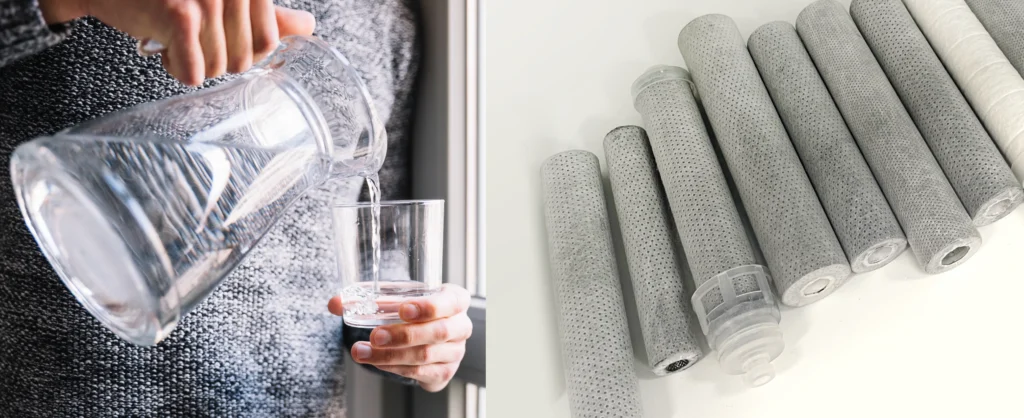
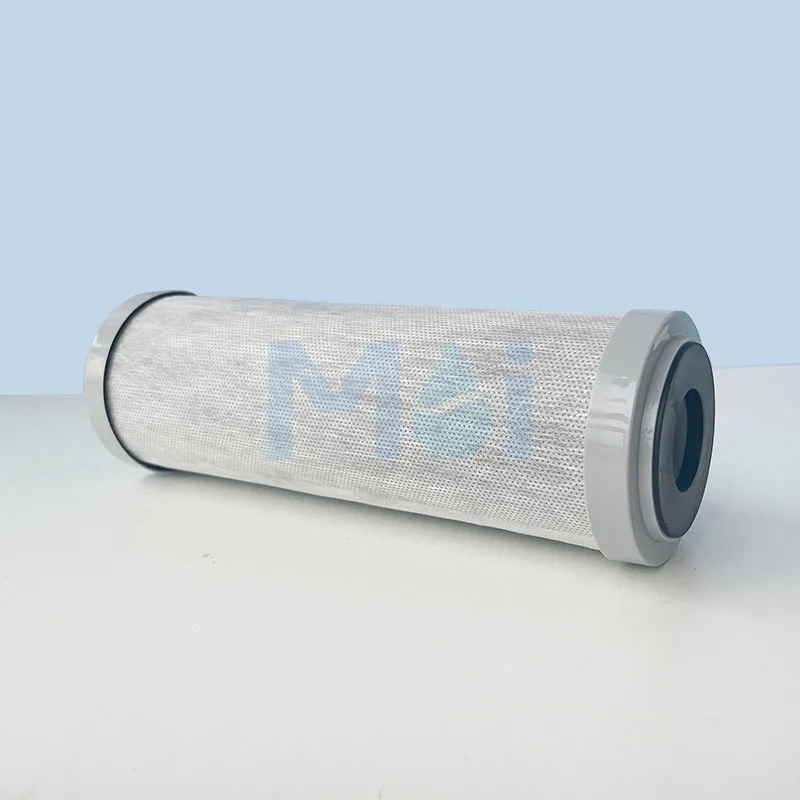
Clean drinking water is a basic necessity for households, restaurants, factories and laboratories. Tap water, well water, and surface raw water often carry suspended dirt, residual chlorine, heavy metal ions, unpleasant odors, and harmful pathogens, etc. A qualified water filtration and purification system eliminates diverse contaminants step by step to produce safe, odor-free and drinkable water. Most standard filtration system designs rely on 4 foundational treatment technologies: physical interception, physical adsorption, chemical ion exchange, microbial disinfection.
1. Physical Interception
Physical interception, also called mechanical filtration, acts as the first protective stage. This mechanism operates like a precision sieve with fixed tiny pores on filter media, only allowing water molecules to pass while trapping larger solid pollutants. Common filter materials used in this stage of a water treatment system include PP cotton water filter cartridge, quartz sand, ceramic filter cartridges and microfiltration membranes. These media block visible impurities, such as rust, mud, sand, hair, and sediment that cause turbid water. The biggest advantage of physical interception is that it requires no chemical additives and will not alter the water’s natural mineral balance. However, a single physical interception unit cannot remove dissolved tiny molecules, heavy metal ions or microorganisms. That is why it always serves as the pre-filter stage in a full water filtration system to prevent subsequent fine filter layers from clogging quickly.
2. Physical Adsorption: A Critical Stage
After removing large particles via mechanical interception, physical adsorption becomes the second key module inside a purification system. Unlike pore blocking, adsorption depends on the massive porous surface structure of special media to capture dissolved organic pollutants through molecular attraction. Activated carbon is the most widely adopted adsorption material for residential water filtration and purification system. Countless micro-pores on carbon granules absorb residual chlorine, strange odors, organic pigments, and volatile organic compounds from tap water, greatly improving water taste. Zeolite and porous sponge media are also used in large commercial water filtration and purification systems for mass odor removal. Physical adsorption only targets soluble taste and color pollutants; it cannot reduce water hardness or kill bacteria. Therefore, it must coordinate with ion exchange and disinfection units to form a fully functional water treatment system.
3. Chemical Ion Exchange for Hard Water Treatment
Many regions suffer from hard water with excessive calcium and magnesium ions, which create limescale on pipes and appliances. Chemical ion exchange is the dedicated module in a water filtration and purification system designed to solve ionic contamination issues that physical filtration and adsorption cannot handle. Ion exchange resin carries replaceable functional groups. When hard water flows through the resin tank of a water filtration and purification system, calcium and magnesium hardness ions are captured and replaced by harmless sodium or hydrogen ions released by resin beads. High-grade ion exchange media can also trap trace heavy metals like lead and copper dissolved in raw water. This chemical treatment slightly adjusts water mineral composition without generating toxic byproducts. Most home water softener units and lab-grade pure water machines integrate ion exchange as a core component of their water filtration and purification system. Regular resin regeneration or replacement ensures stable long-term purification performance.
4. Disinfection Process to Secure Output of Water Filtration and Purification System
Particles, organics and hard ions can be filtered out by the first three stages, but tiny bacteria, viruses, and protozoa may still leak through filter gaps. Disinfection works as the final safety barrier in any reliable water filtration and purification system to eliminate infectious microorganisms. UV-C sterilization is the most popular disinfection method for household water treatment systems. Short-wave ultraviolet light destroys the DNA and RNA of pathogens, stopping their reproduction and reaching a sterilization rate over 99.99%. Ozone disinfection is more common in industrial filtration systems, as ozone oxidizes both germs and leftover organic pollutants simultaneously. Proper disinfection leaves no harmful chemical residues and does not ruin water flavor. Without this stage, even a fully filtered cannot guarantee microbiologically safe drinking water.
How the 4 Stages Combine in One Complete Water Filtration System
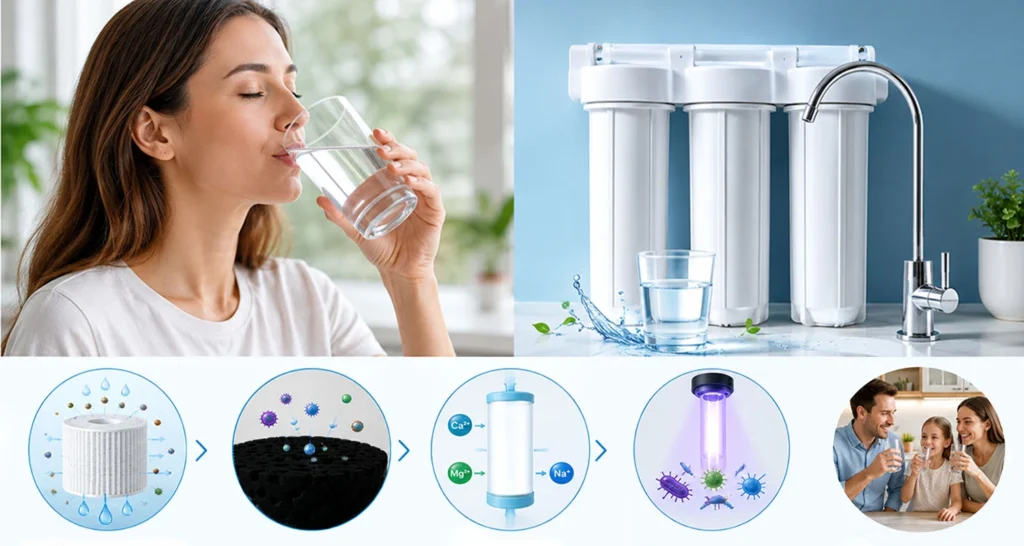
A high-performance water filtration and purification system arranges the four working processes in fixed order: physical interception first, followed by physical adsorption, then ion exchange, and disinfection at the end.
- Physical interception blocks large sediment to protect downstream filter elements;
- Physical adsorption removes chlorine and strange odors to optimize water taste;
- Ion exchange reduces water hardness and removes dissolved heavy metal ions;
- Disinfection kills remaining pathogens to meet drinking water health standards.
Only when all four mechanisms work together can a water filtration and purification system comprehensively address particulate, organic, chemical and microbial pollution in raw water.
Conclusion
Every functional water filtration and purification system relies on the four core purification principles to convert unprocessed raw water into clean drinking water. Physical interception removes solid waste, physical adsorption improves taste, ion exchange treats hard water and heavy metals, and disinfection eliminates dangerous pathogens. Whether for residential, commercial or industrial scenarios, choosing a multi-stage water filtration and purification system covering all four processes is the most effective way to secure long-term safe water supply.