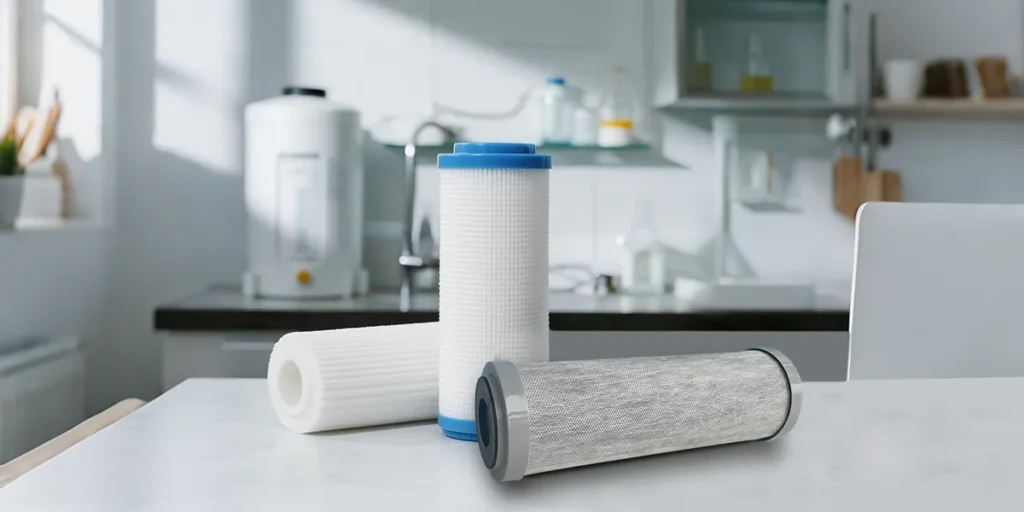
A water filter cartridge is designed to remove unwanted particles, chlorine, odors, and other contaminants from water. However, many homeowners face a common problem: water filter cartridges clog, degrade, or lose filtration efficiency far earlier than the advertised lifespan. Frequent cartridge replacement not only increases household maintenance costs but also causes unnecessary waste and extra installation trouble.
The actual lifespan of a water filter cartridge depends on several factors, including water quality, filtration load, cartridge design, flow rate, and maintenance habits.
Choose the right filter, use pre-filtration, control flow rate, maintain the system, and replace it when performance declines. You can effectively extend the water filter cartridge service life. In this guide, we will share practical, easy-to-follow tips to maximize your water filter cartridge’s lifespan.
1. Understand the Key Factors That Shorten Filter Cartridge Lifespan
Before learning maintenance skills, it is crucial to figure out what causes premature cartridge failure. Most short-lived filter issues stem from avoidable daily factors, rather than product quality problems.
- Poor raw water quality: Tap water with high sediment, rust, particulate impurities, or excessive chlorine will accelerate pore blockage and material consumption of filter cartridges.
- Overuse and continuous operation: Long-term uninterrupted water flow and excessive water usage overload the filter medium, leading to rapid clogging.
- Improper installation and flushing: Incomplete pre-flushing, wrong water flow direction, and loose installation cause unfiltered impurities to accumulate inside the cartridge.
- Lack of regular cleaning: Accumulated dirt, biofilm, and residual bacteria on the cartridge surface block filter pores and reduce filtration efficiency.
- Idle for a long time: Stagnant water inside the filter cartridge breeds microorganisms, deteriorates filter materials, and causes permanent performance loss.
2. Install a Pre-Filter for Advanced Protection
One of the most effective ways to extend water filter cartridge life is to add a pre-filtration system. A basic whole-house sediment pre-filter can intercept over 90% of large impurities such as sand, rust, and mud in tap water before the water flows into the main filter cartridge.
Without a pre-filter, these large particles will directly attach to the surface of precision filter cartridges (activated carbon, RO membrane, ceramic), quickly blocking tiny filter pores. According to water filtration industry tests, installing a standard pre-filter can prolong the service life of rear filter cartridges by nearly 30% and greatly reduce the frequency of deep cleaning and replacement. For households with old water pipes or turbid tap water, a pre-filter is an indispensable cost-effective investment for filter maintenance.
3. Adopt Correct Daily Water Usage Habits
Unreasonable usage habits are the main cause of premature cartridge aging. Simple adjustments to daily water use can significantly optimize the cartridge’s service cycle.
Avoid Continuous Long-Term Operation
Don’t let the water filter run continuously for hours without interruption. Sustained high water flow will make the filter medium bear excessive pressure, leading to accelerated wear and pore compaction. It is recommended to turn off the water filter properly after continuous water use for 1-2 hours to let the filter medium rest and restore partial filtration elasticity.
Drain Stagnant Water Before Use
If the water filter has been idle for more than 24 hours, the water stored inside the cartridge will become stagnant and breed tiny bacteria and biofilm. Before formal use, drain 1-3 liters of water fully to wash away stagnant water and loose surface impurities. This simple operation effectively prevents biofilm accumulation and avoids secondary pollution blocking filter pores.
4. Standardize Installation and Replacement Operations
Many filter cartridges fail early due to non-standard installation. Mastering correct installation and replacement skills can maximize the utilization cycle of each cartridge.
- Follow the water flow direction strictly: Install the cartridge according to the marked arrow direction. Reverse installation will cause impurities to deposit inside the filter medium and lead to rapid clogging.
- Avoid over-tightening installation: Firmly fix the cartridge to prevent water leakage, but do not over-screw it to avoid squeezing and damaging the internal filter structure and sealing ring.
- Complete pre-flushing after replacement: After installing a new cartridge, flush the system for 3 to 5 minutes to remove fine carbon powder, dust, and air bubbles generated during production and installation, preventing internal blockage.
- Use matching genuine cartridges: Inferior incompatible cartridges have uneven filter pore sizes and poor material quality, which are prone to rapid clogging and secondary pollution. Genuine matching products ensure stable service life and filtration effect.
5. Monitor Water Quality to Adjust Maintenance Frequency
There is no fixed one-size-fits-all maintenance cycle. You need to adjust cleaning and inspection frequency according to local tap water quality and actual water consumption.
For families in areas with hard water, high chlorine content, or serious pipe rust, the filter cartridge consumes faster, so it is necessary to increase cleaning frequency appropriately. You can use a portable TDS meter to monitor water quality in real time. If the TDS value of filtered water increases by 15% to 20% compared with the initial state, it indicates that the cartridge is partially blocked and needs timely cleaning or maintenance.
In addition, record daily water usage and refer to the rated total water volume marked by the manufacturer. Judging the cartridge’s service status by actual water purification volume is more scientific than relying solely on time estimation, which can avoid premature replacement or overdue use.
6. Avoid These Common Mistakes That Damage Filter Cartridges
Many unintentional daily behaviors will greatly shorten the life of water filter cartridges. Avoid the following wrong operations:
- Using chemical detergents, bleach, or disinfectants to clean filter cartridges, which will corrode filter materials and destroy adsorption performance.
- Overusing the cartridge beyond the service cycle to save costs, resulting in pore hardening and irreversible failure.
- Long-term shutdown without draining water, leading to mold and microbial growth inside the cartridge.
- Exposing the filter device to high-temperature or direct sunlight environments, accelerating the aging and deterioration of filter materials.
How Manufacturers Improve Water Filter Cartridge Lifespan
For professional filtration applications, cartridge lifespan depends not only on usage but also on manufacturing technology.
High-quality filter cartridges use optimized structures to improve dirt-holding capacity and filtration efficiency.
Examples include:
- Multi-layer PP fiber structures for gradual particle capture.
- High-surface-area activated carbon materials for improved adsorption.
- Composite designs combining sediment filtration and adsorption.
- Customized cartridge dimensions to match specific housing and flow requirements.
At Damai, we develop customized water filter cartridges based on application requirements, including material selection, filtration performance, dimensions, and OEM specifications.
Final Thoughts
Extending the service life of a water filter cartridge does not require complicated professional operations, but depends on persistent scientific maintenance and correct usage habits. Installing a pre-filter, regular targeted cleaning, standardized use and installation, and real-time water quality monitoring can effectively delay cartridge aging and clogging.
These methods not only reduce household water filter maintenance costs and replacement frequency but also ensure long-term stable water purification effect and protect your family’s drinking water safety. Adhere to these simple maintenance tips, and you will maximize the value of every water filter cartridge.
FAQs
Q1: How long does a standard water filter cartridge last?
Under normal water quality and usage conditions, PP sediment filters last 3-6 months, activated carbon filters last 6-12 months, ceramic filters last 12-18 months, and RO membrane cartridges can last 2-5 years. The actual lifespan varies with water quality and maintenance habits.
Q2: Can a clogged filter cartridge be cleaned and reused?
Reusable cartridges such as ceramic and thickened PP filters can recover filtration performance after professional cleaning. However, compressed activated carbon and ultrafiltration cartridges with saturated adsorption cannot be reused and must be replaced in time.
Q3: How do I know if my water filter cartridge needs replacement?
Signs of failed cartridges include reduced water flow rate, turbid filtered water, abnormal odor, and significantly increased TDS value of purified water. If these problems still exist after cleaning, the cartridge needs to be replaced immediately.